


Root canal treatment (endodontics)
Price of Root Canal Treatment
WHAT IS ENDODONTIC TREATMENT
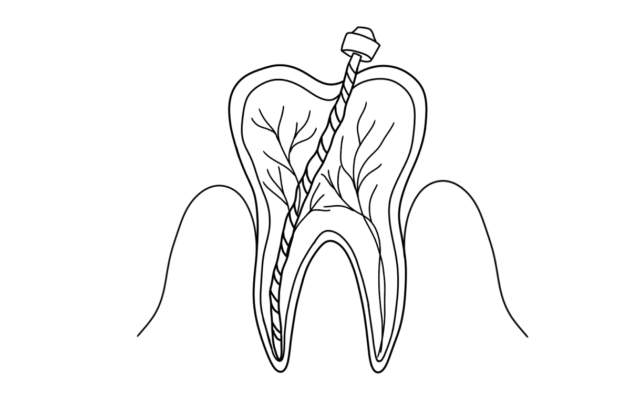
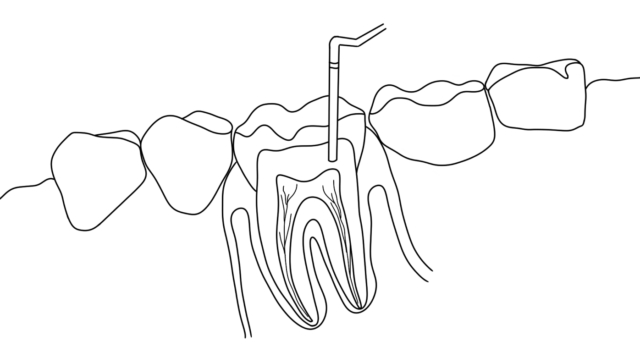
Root canal treatment or endodontics is a type of dental service aimed at eliminating infection inside the tooth, primarily by conservative instrumental methods.
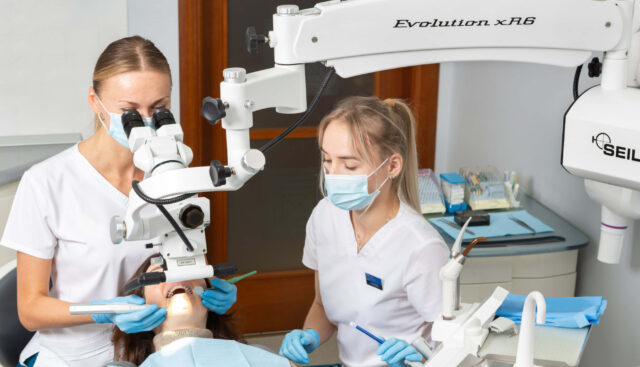
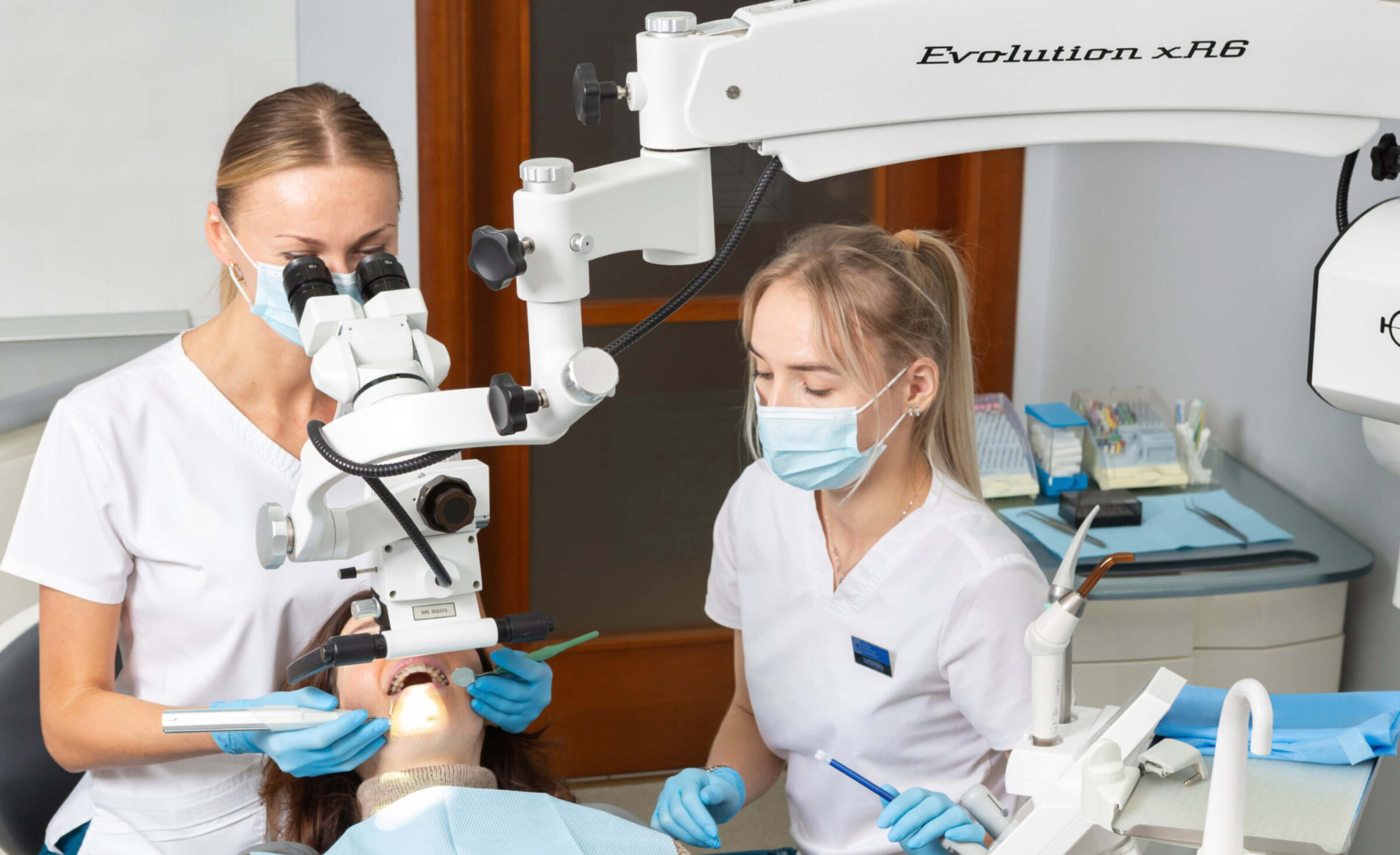
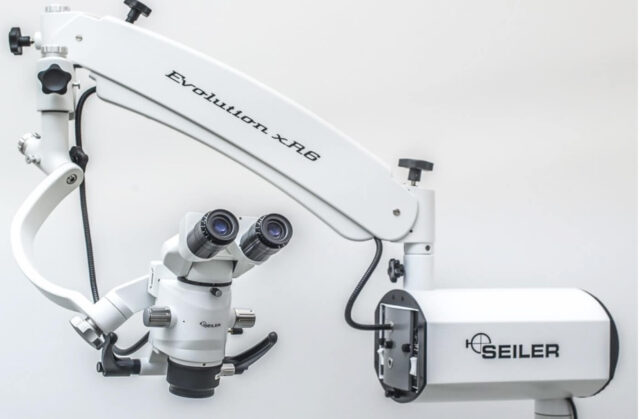
We follow the generally recognized foundations of effective endodontic treatment in modern dentistry: tooth isolation, use of a dental microscope, full compliance with the protocols of irrigation and mechanical treatment, electronic canal length determination, volumetric analysis of canal filling.
THE IMPORTANCE OF TIMELY ENDODONTIC TREATMENT
Timely treatment of canal infections can significantly improve the prognosis since a neglected or complicated process, even if imperceptible, leads to the loss of the tissues of the tooth itself and the bone. And this not only complicates the restoration (if the conservative approach can be applied) but can complicate the preparation for implantation if it is impossible to save the tooth.
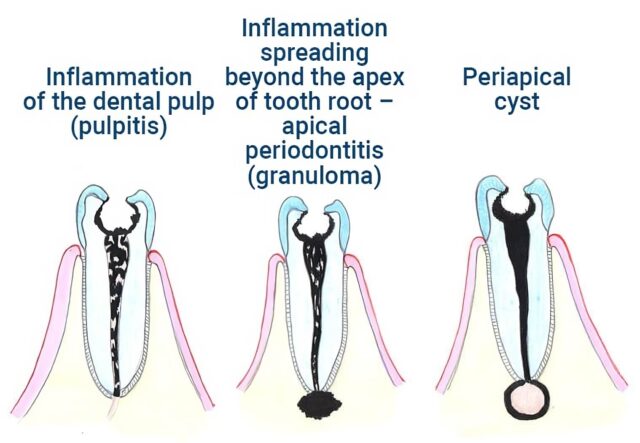
The main indications for root canal treatment are pulpitis and periodontitis.
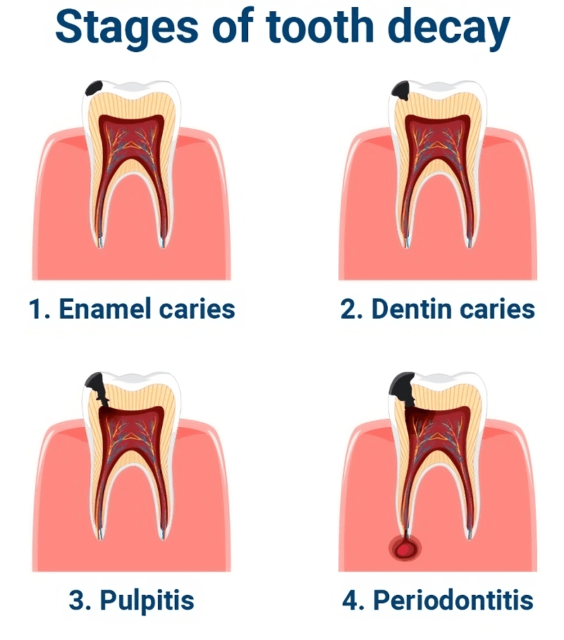
Signs of pulpitis are:
- Hypersensitivity when eating hot and cold food.
- Insomnia, caused by painful sensations.
- Increased body temperature, fever and malaise.
- Loss of appetite.
Similar symptoms are characteristic of periodontitis. However, sometimes these diseases don’t have obvious symptoms. In this case, the doctor detects them during diagnostic procedures.
People often prefer to postpone a visit to the dentist if the pain does not bother them much. But such a decision can result in various complications. The consequences of an unfilled canal are an acute inflammatory process with pain syndrome, apical abscess, and periostitis.
The procedure for root canal refilling is necessary if pain persists or appears after filling, signs of inflammation are visible on the X-ray, and the tooth canal is not completely closed.
WHEN ROOT CANAL TREATMENT IS NEEDED
Depending on the type of inflammatory process in a tooth, it may be accompanied by both severe pain syndrome and be mild or entirely insensible for several years. Sometimes an abscess develops; a fistula can appear and disappear.
Sometimes, an X-ray can help detect a trace of bone inflammation, indicating a granuloma or cyst. All these and several other signs can be identified and differentiated only by a doctor in a specially equipped office.
METHODIC OF ROOT CANAL TREATMENT
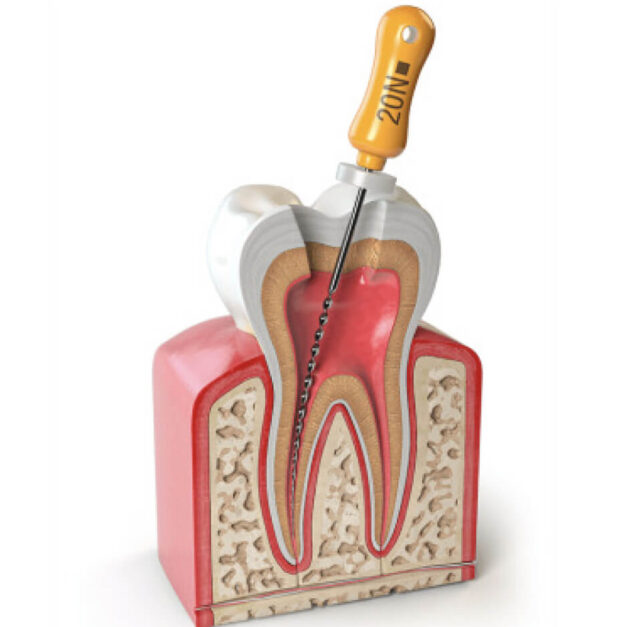
Today, in most cases of pulpitis (inflammation of the pulp, tooth soft tissue) and periodontitis (inflammation around teeth roots tips), treatment is carried out conservatively and promptly. After all the necessary examinations of the tooth condition, anesthesia is performed. Treatment of root canals in our Clinic is carried out using a rubber dam, that is, the tooth’s isolation from the oral cavity, which prevents the saliva and irrigation solutions ingress into the mucous membranes. The tooth is cleaned, the length of the canals is determined electronically. High-quality root canal treatment is impossible without full treatment and rinsing. Primary treatment includes negotiation, enlargement, and thorough ultrasonic activated irrigation of all tooth canals using visual and X-ray control.
Endodontic treatment’s ultimate goal is obturation, filling of the cleaned root canals, the communication between them, and accessory canals with a sealing material. We do not use any toxic and hormone-containing filling materials, as we are interested in the tooth’s long-term rehabilitation, not in “healing.” For spacial obturation, an inert AH Plus sealer and warm gutta-percha are used, which in the liquid phase fills all anatomical sections of the root canals, which gives maximum tightness, meaning a better prognosis.
Root Canal Cleaning
In the treatment process, the nerves are removed. This type of procedure is almost impossible without the use of anaesthesia. Also, a dental X-ray or 3D tomography should be performed for accurate diagnosis. Canal cleaning takes one to two hours. Approximately the same amount of time is required for preparatory procedures.
Root canal treatment is a simple and practical way to save a tooth. Often this is the only way to save a tooth from extraction and, at the same time, prevent the spread of infections and bacteria from the inflamed tooth into the body.
IS ROOT CANAL TREATMENT PAINFUL?
Endodontic treatment is performed under local anesthesia. If indicated, treatment under sedation is possible. The process itself usually acts soothingly without additional means since the patient is in a comfortable chair and does not feel any discomfort.
After root canal treatment or under a temporary filling, the tooth may hurt, which is normal.
The reasons:
- tissues are injured in the treatment process;
- periodontal reaction to drugs;
- acute inflammatory process due to the interaction of drugs and microbes;
- pain may occur at the injection site.
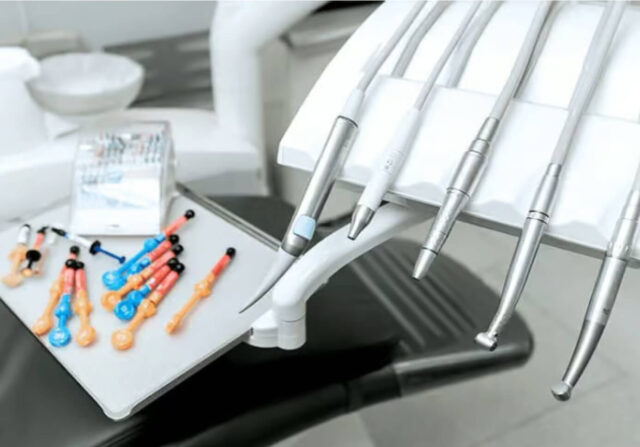
Usually, the discomfort disappears after a few days, the doctor will prescribe the necessary painkillers. If a tooth bothers you for more than a week, you should definitely consult a doctor. Do not endure pain or treat it using folk remedies.
Sometimes, after treatment, swelling of the gums or cheeks can appear. In such cases, you need an unscheduled visit to a doctor. The dentist will prescribe medication or re-treat the canals of the tooth.
After endodontic treatment, it is necessary to place a ceramic crown or inlay since pulpit teeth are most often severely destroyed by caries.


Reviews


FAQ
Are root canals treatment painful?
Currently, all dental procedures possibly causing painful sensations are performed under anesthesia. You do not need to worry and tensely expect that the doctor is about to “touch the nerve,” local anesthesia helps not think about the sensations during the procedure.
Root canal vs. extraction: what’s the difference?
Root canals are located within the roots of the teeth, holding them in the jaw. The roots remain, and the canals inside of them are cleaned and sealed.
Why do I need root canal treatment if my tooth doesn’t hurt?
It is not uncommon to have the canals re-treated due to poor previous treatment. The resealing can occur after the treatment, causing root canal infection, making periodontal disease visible through an X-ray. Modern standards of primary root canal treatment almost eliminate the need for further retreatment.
Earlier, during root canal treatment, a doctor would replace the medication inside the tooth, but how is it treated now?
The root canal treatment method requiring a change of medication for more than 4 weeks is hopelessly outdated. 1-2 visits are enough for most endodontic treatment cases.

 Out team
 Reviews
 Blog
Blog News
News Price list
 Partners
 FAQ
FAQ Vacancies
 Dental Consultation
 Tooth Decay Treatment
 Root canal treatment (endodontics)
 Orthodontics
 Dental implantation
 Dental prosthetics
 Professional oral hygiene
 Tooth Filling
 Periodontal disease treatment
 Teeth restoration
 Teeth extraction
 Surgical dentistry
 Sedation dentistry (sleep dentistry)