


 (14)
(14)

6 min.
971
Medical expert for this article:

 Cavities and inflammatory processes in the oral cavity increase the risk of developing other systemic diseases. For example, according to the American Dental Association, the presence of cavities and periodontitis can increase the risk of cardiovascular disease by 20% due to bacteria entering the bloodstream, which emphasises the importance of timely treatment.
What is the initial stage of decay?
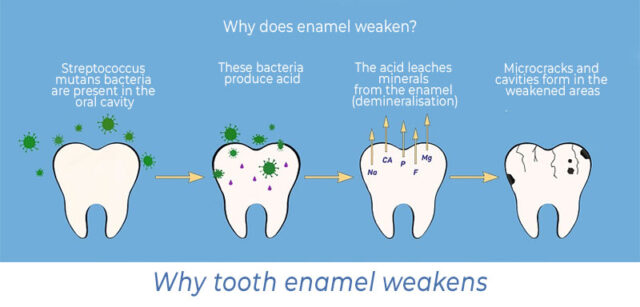
The initial stage of decay is the demineralisation of enamel without destruction of hard tooth tissue. It manifests itself as a dull light or dark spot. Under the influence of acids secreted by bacteria, minerals, primarily calcium and phosphorus, are washed out of the enamel. This process begins when the pH level in the oral cavity falls below 5.5 (the critical pH level for enamel demineralisation). At this stage, decay is reversible. If measures are taken in time, complete restoration of the enamel structure is possible: eliminating the causes, changing hygiene habits, and remineralisation.What does caries look like in its early stages?
 The main external sign is a spot on the surface of the enamel. It can be:
- Whitish, chalky — indicating a loss of minerals.
- Brownish or dark — if pigments from food and drinks are involved.
- Painless — as long as there is no sensitivity or tissue destruction.
Stages and degrees of tooth decay
The development of cavities is classified according to the depth of tissue damage:- Spot stage — demineralisation of the enamel without destruction.
- Superficial caries — destruction of the enamel without damage to the dentine.
- Moderate caries — the dentine is affected, and pain may occur when eating sweet, cold, or hot foods.
- Deep caries — significant destruction of dentine, approaching the pulp. Treatment of chronic deep caries will be more lengthy and expensive.
- Complicated caries — development of pulpitis or periodontitis.
Causes of early-stage decay
Factors contributing to the onset of enamel demineralisation:- Poor hygiene: plaque, bacteria, and a lack of regular hygienic teeth cleaning.
- Diet: excess sugar, acidic drinks, frequent snacking.
- Dry mouth: reduced salivation impairs natural remineralisation.
- Enamel hypoplasia: congenital weakness of hard tissues.
- Hormonal changes: adolescence, pregnancy.
- Orthodontic appliances: insufficient hygiene around braces.
- Smoking and alcohol consumption.
Methods of treating early decay
If decay is detected at the stain stage, treatment is done without drilling and filling. The primary methods are:- Enamel remineralisation involves applying fluoride, calcium, and phosphate-based preparations. According to the American Dental Association, fluoride use can reduce caries incidence by 20-40% in children and adults.
- Deep fluoridation — strengthening of enamel with special varnishes and gels.
- Enamel infiltration (ICON technology) — filling the pores of the enamel with an infiltrant without a drill.
- Professional oral hygiene — removal of plaque and tartar, preparation for remineralisation therapy.
- Control of nutrition and hygiene.
Treatment of decay at the stain stage
At this stage, the dentist’s task is to restore the mineral composition of the enamel. The procedure includes:- Cleaning the tooth surface from plaque and biofilm.
- Treatment of the enamel with remineralising agents (a course of 5 procedures).
- Home maintenance therapy — toothpastes and rinses with calcium and fluoride.
- Follow up every 3–6 months.
When does the initial stage require filling?
 If the dentist finds a deepening, roughness, or signs of deep demineralisation, a minimally invasive restoration is necessary. Drilling is performed within the enamel, followed by the placement of a filling.
Aesthetics are essential for front teeth, so during treatment, the dentist carefully selects the shade of the filling material to match the colour of the enamel and restores the tooth’s natural shape.
If the dentist finds a deepening, roughness, or signs of deep demineralisation, a minimally invasive restoration is necessary. Drilling is performed within the enamel, followed by the placement of a filling.
Aesthetics are essential for front teeth, so during treatment, the dentist carefully selects the shade of the filling material to match the colour of the enamel and restores the tooth’s natural shape.
Prevention of cavities in the early stages
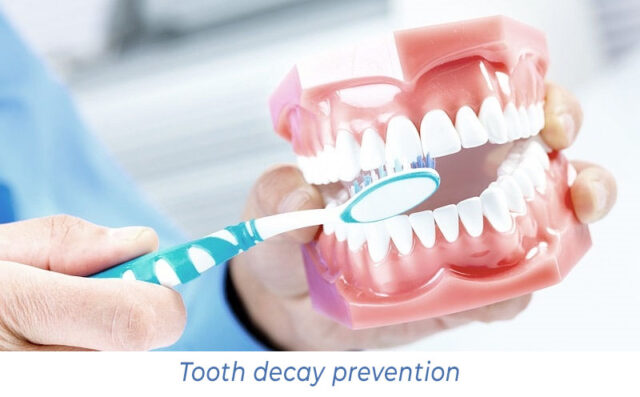
Prevention is the primary tool in the fight against caries. Recommendations:- Have regular check-ups with your dentist — once every 6 months.
- Treat caries in its early stages.
- Have your teeth professionally cleaned at least 1-2 times a year.
- Maintain good hygiene: toothbrush, dental floss, mouthwash.
- Fluoride toothpaste: According to a review of 75 clinical studies published in the Cochrane Library, fluoride toothpaste reduces the risk of caries by 24% compared to non-fluoride toothpastes.
- Limit sugar and acidic foods.
- Use fluoride toothpaste — if there are no contraindications.
- Keep a close eye on children — baby teeth are prone to early decay.
- Check old fillings — secondary tooth decay can start through microcracks.
 If detected in time, early tooth decay is not a death sentence. Modern treatment methods allow you to save your tooth without fillings or drills. The main thing is to be attentive to yourself, visit the dentist regularly, and follow hygiene recommendations. At the KES clinic, we will accurately determine the stage of decay, select an effective solution, and help you maintain a healthy smile.
Learn more about the services related to this topic. Below, you’ll find detailed information about the relevant treatment methods and options.
Photopolymer Filling in Kyiv
Cervical Caries



 Our team
 Reviews
 Blog
Blog News
News Partners
 FAQ
FAQ Vacancies
 Dental Consultation
 Tooth Decay Treatment
 Root canal treatment under a microscope
 Orthodontics
 Dental Implants
 Dental Prosthetics
 Professional Oral Hygiene
 Tooth Filling
 Periodontal disease treatment
 Aesthetic Dental Restoration
 Teeth extraction
 Surgical dentistry
 Sedation dentistry (sleep dentistry)