


 (142)
(142)


Straight teeth are not just a matter of aesthetics. It’s an important aspect of oral health. Bite defects and misaligned teeth lead to several problems, such as difficulty chewing food, increased risk of tooth decay and gum disease.
Modern orthodontic techniques offer various options for correcting tooth ranges, from braces to mouth guards. In this article, we’ll look at the specifics of each type of treatment.
How braces and mouthguards work: the main differences
Braces are multi-component devices that correct bites and align teeth. The appliance consists of the following elements:
- Braces are small plates made of metal, ceramic or artificial sapphire, fixed on the teeth with a special glue.
- The arch wire connects the braces and shifts the teeth into the correct position.
- Ligatures (not available in all systems) – wire or rubber rings that hold the arch in the braces and prevent it from falling out.
- Elastic bands – rubber bands that speed up the tooth shifting.
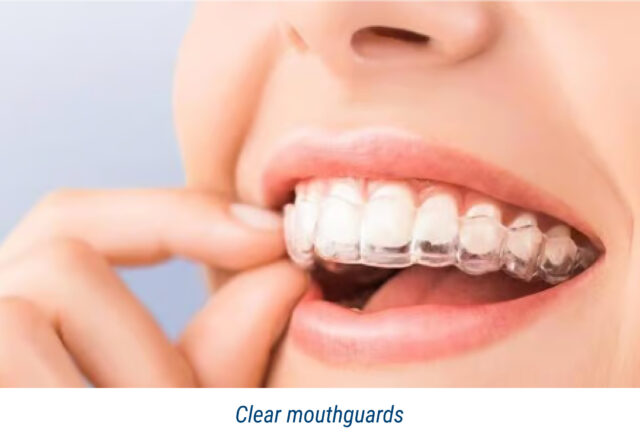
Mouthguards (otherwise known as aligners) are transparent plastic covers that a patient should wear for a certain amount of time during the day. The appliances are custom-made for each patient. During treatment, a certain number of aligners are used — the onlays are changed as the teeth move.
How braces work
The function of braces is to create constant pressure on the teeth and thus move them to an anatomically correct position. The principle of action is as follows:
- Braces are fixed on the teeth. Each brace has a groove in which a metal arch is placed. By connecting the plates, the arch creates a particular load.
- The arch has shape memory. It is initially given the shape of the correct row. Once attached to teeth with an abnormal bite, the arch returns to its original position.
- During treatment, the bone and soft tissues adapt to the changes. The gradual movement of the teeth requires periodic adjustments: the doctor adjusts the tension of the wire and puts on new ligatures, changes the arch, etc.
How the mouthguard works
The mouthguard is made of thin, durable plastic and is customised to the patient’s jaw model. The mouthpiece fits snugly over the teeth and is virtually invisible to the eye.
The mouthguards exert even pressure on the attachments that hold the teeth in place, which helps the teeth to move.
The mouthguards should be replaced approximately every three weeks. Each new onlay, which considers the teeth’ movement, differs from the previous one.
Advantages and Disadvantages of Braces
Like any treatment method, braces have advantages and disadvantages. Let’s focus on this point in more detail.

Which pathologies do braces correct?
The main advantage of braces is the ability to cope with complex anomalies. Fixed orthodontic appliances can be used to correct different types of bite problems:
- mesial occlusion, or prognathism – the upper teeth are pushed forward, and the lower jaw is shifted backwards;
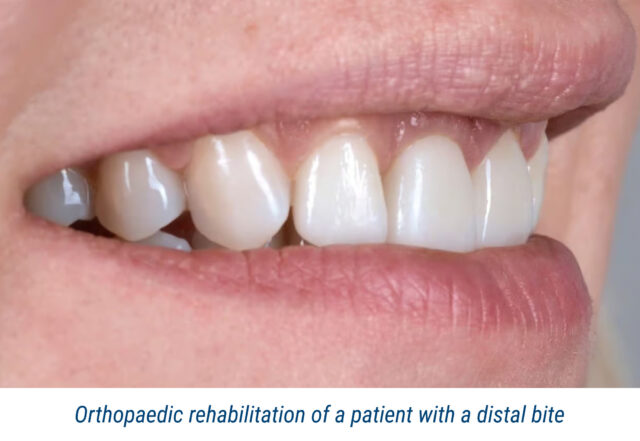
- distal or prognathic occlusion – misalignment of the jaws where the lower teeth overlap the upper teeth;
- crossbite – the line of the lower and upper teeth are joined crosswise;
- deep bite – the upper teeth overlap the lower teeth by more than 50%;
- open bite – there is no contact between the jaws when they clamp together.
In addition, braces can help to eliminate crowding of the teeth. Crowding occurs when there is not enough room for growth, large gaps between the teeth, which appear when the jaw, on the contrary, too wide, as well as microdentistry in normal jaw size.
Disadvantages and limitations of braces
The disadvantages of braces include:
- Duration of treatment. Depending on the complexity of the case, the process of bite correction can take from several months to two to three years.
- Pain and discomfort at the initial stage and after the correction of the arch. In self-ligating systems, there is less discomfort.
- Traumatisation of the mucous membranes of the lips and oral cavity.
- Complications with hygiene – a large amount of plaque is formed on the fixed appliance, so after each meal you need to brush your teeth. When visiting a cafe, you will have to take a brush and toothpaste with you.
- Dietary restrictions. Due to the risk of chipping braces, hard foods, viscous and sticky foods are forbidden.
Advantages and Disadvantages of Mouthguards for Teeth Alignment
Aligners are indicated for mild to moderate pathologies. Like braces, mouthguards have certain advantages and disadvantages.
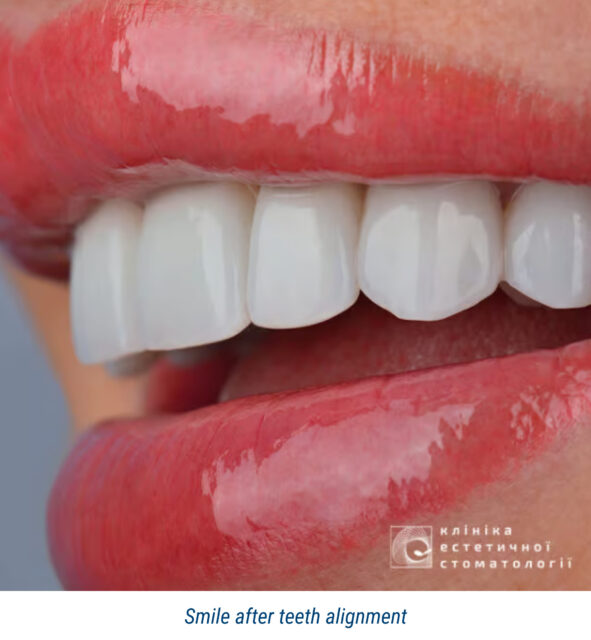
Advantages of treatment with aligners:
- It is a removable appliance. The mouthguards can be removed from the mouth during meals and hygiene procedures.
- Due to computer modelling, the treatment has a predictable result.
- There is no need for frequent visits to the orthodontist – one visit every three to four months is sufficient.
- Aligners are made of hypoallergenic biocompatible material, which has no harmful effects on the body during long-term wear.
- Treatment with mouthguards is not contraindicated for patients with allergies to different types of polymers or metal.
- Due to the gentle effect on the teeth, the treatment takes place without discomfort and pain.
- Hygienic procedures are not very complicated.
- The onlays need to be removed during meals, so the patient does not need to adhere to dietary restrictions.
In what cases is it better to choose mouthguards?
Aligners are effective for correcting the following dental defects:
- gaps between teeth no more than 4 mm;
- widened or narrowed dental arch;
- crowding, crooked, tilted teeth;
- mesial, open or deep bite with a slight occlusal disorder.
In addition, mouthguards are preferred by patients who are not ready to experience discomfort, lead an active lifestyle or do not want to advertise the fact of orthodontic treatment.
Limitations of mouthguards for complex cases
Aligners are ineffective in skeletal dentoalveolar anomalies and severe bite disorders.
Aesthetics and Comfort: Braces or Mouthguards
The aesthetics of vestibular braces depends on the material from which they are made. Medical steel and nickel alloys are considered the classic option. Due to the specific colour of the metal, they are clearly visible on the teeth, so they are considered unattractive.
Orthodontic appliances made of ceramic and synthetic sapphire look more balanced. The former correspond to the colour of natural teeth, the latter are made of transparent material that shines beautifully in the light. But with all the aesthetics of such models, external braces cannot be hidden from prying eyes. For those who prefer not to emphasise the process of bite correction, lingual systems or mouth guards are recommended.
Comfort of Wearing Braces
In terms of comfort and convenience, braces are less comfortable than orthodontic mouthguards. Unpleasant sensations are associated with rubbing the mucous membranes of the lips and cheeks with protruding elements of the structure. With lingual appliances, there are no such problems, but it can rub the tongue.
In addition, in the first days after fitting a fixed system, patients experience painful sensations from the pressure of the arch on the teeth. The discomfort lasts from a few days to a week. After the braces are adjusted by an orthodontist, the discomfort may resume with less force as the teeth are once again subjected to pressure.
No such problems occur when wearing mouthguards. Patients get used to the presence of a foreign object in the mouth within a few hours after fitting, but pressure is felt on the teeth for the first few days.
Aesthetic Advantages of Mouthguards
The main advantage of aligners is their ultimate aesthetics. Thanks to the transparent material, they are virtually invisible to the outside eye. Aligning teeth without braces is the ideal solution for public figures and anyone who wishes to undergo treatment without being visible to others.
How to choose the best method of teeth alignment – orthodontic advice
The choice of the method of teeth correction should be made together with the dentist. The patient’s individual characteristics, wishes and financial possibilities are considered.
Tips of an orthodontist when choosing between braces and mouthguards
- Assess your own needs. In mild disorders, a good result can be achieved with aligners. In complex cases, braces are necessary.
- Decide how important aesthetics is. If the priority is functionality – choose a fixed orthodontic appliance.
- Explore the different options. Braces can be fitted on the outside and inside the teeth. Lingual systems are pricier, they are more difficult to fix and adjust. Appliances can be ligated and self-ligating. In the second case, you will not need to change the elastic rings on the braces.
- Find out about the timing of treatment in your situation. In some cases, braces and aligners require the same period.
- Decide how essential comfort is to you – are you prepared for dietary restrictions and complicated care of the appliance?
- Consider your lifestyle. If you are always active and do sports, consider using mouthguards – they are less traumatic.
How to consider the individual characteristics of the patient?
There are several things to consider:
- The patient’s age. In children and adolescents, the jaw continues to grow, so it is more effective to correct bite irregularities. Adults more often turn to an orthodontist with complex cases when pathology has already formed.
- The condition of the dentoalveolar system. The choice of method is influenced by the size and shape of the teeth, the type of bite, the severity of pathology, the presence of overcomplete or abnormally growing units.
- Hygiene habits. Patients with insufficient oral care will find it more difficult to cope with braces. If possible, it is better to use aligners in such cases.
- Psychological factors. Some people are not ready to wear an appliance that is noticeable on the teeth. Then it is worth considering the option of installing a lingual system or treatment with mouthguards.
Every patient is unique, so it is important to consider all factors when choosing a correction method.
If you have orthodontic concerns, come in to get a consultation at KES. Our orthodontist will examine you and help find the best solution for you.




 Out team
 Reviews
 Blog
Blog News
News Price list
 Partners
 FAQ
FAQ Vacancies
 Dental Consultation
 Tooth Decay Treatment
 Root canal treatment (endodontics)
 Orthodontics
 Dental implantation
 Dental prosthetics
 Professional oral hygiene
 Tooth Filling
 Periodontal disease treatment
 Teeth restoration
 Teeth extraction
 Surgical dentistry
 Sedation dentistry (sleep dentistry)