



Bone grafting

What is Bone augmentation?
A prerequisite for implantation is a sufficient volume of bone in the jaw, making it possible to securely and stably anchor dental implants. However, if the residual bone volume is insufficient, bone transplantation (grafting) is necessary.
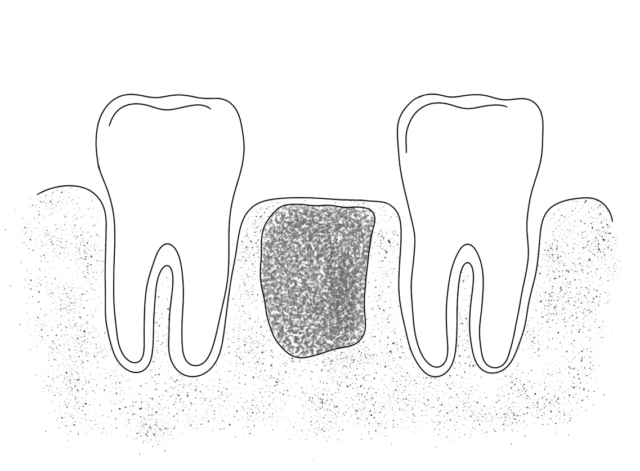
What material is used for bone augmentation?
Materials for bone grafting or bone augmentation can be:
- autogenous bone material (the recipient and donor is the same person);
- allogeneic bone material (the recipient and donor are different people);
- xenogeneic bone substitute (obtained from animals);
- alloplastic materials – substitutes for natural bone material (made synthetically).
An autogenous, that is, one’s bone graft, is considered particularly suitable because it is well tolerated and is directly involved in the formation and development of new bone. In this method, the bone is taken from the mandible angle area. The disadvantage is that we can get a minimal amount of material, and this method requires additional surgical intervention.
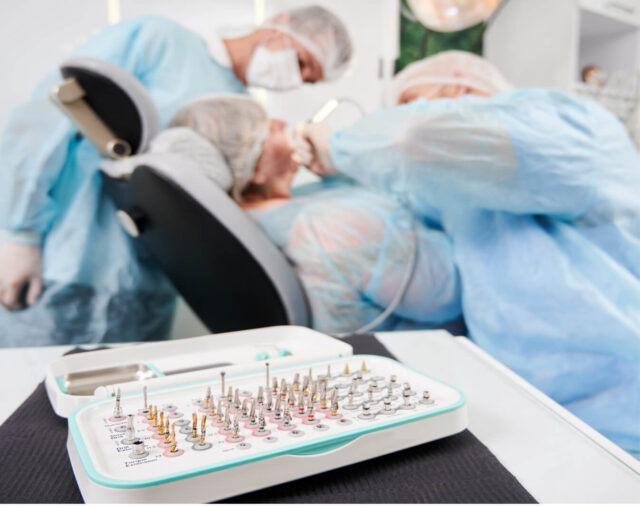
Allogeneic bone material. The advantages of allogeneic bone material are that it is available in any quantity and does not require additional surgery to harvest bone tissue. However, like any organ transplant, it can trigger an immune response in the recipient. Longer bone formation times should also be expected since allogeneic bone does not have the same favorable formation properties as autogenous material.
In recent years, good results have been achieved using xeno- and synthetic materials for human bone substitutes. Therefore, they are an excellent alternative to human bone.
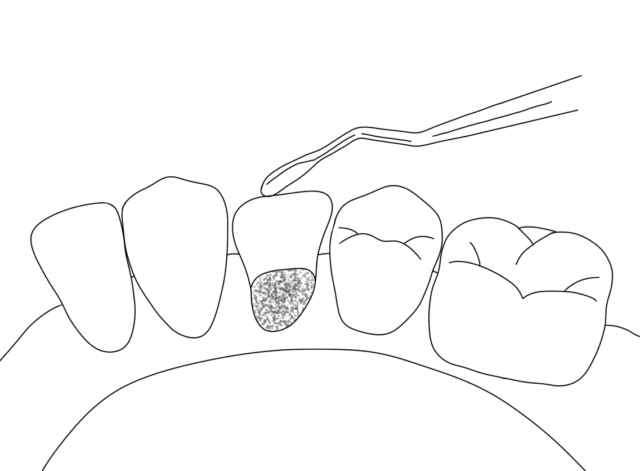
Equipment
Piezoelectric bone surgery using a piezoelectric scaler is a method of performing surgical procedures in dentistry, such as tooth extraction, bone augmentation, and dental implantation. Under the influence of ultrasonic frequencies, even the hardest tissues are dissected, while soft tissues are not injured at all. The method allows surgical operations to be performed safely and minimally traumatic.
A centrifugal machine allows obtaining Platelet-Rich Fibrin (PRF), an autologous fibrin matrix produced from a patient’s platelet concentrate. The simplified manufacturing process conducted in the doctor’s office allows immediate generation of platelet-rich fibrin membrane that does not lose the potential to stimulate bone and soft tissue growth. The auto-biomaterial (PRF) main property is the slow release of growth factors over 7 days, speeding the wound healing process.
For example, if there is a residual ridge resorption, we use the osseodensification method applying Densah Bursversah instruments to perform sinus lifting or increase the alveolar bone volume. These instruments allow thickening of bone tissue, expand the alveolar ridge without bone grafting, or avoid sinus lift surgery.
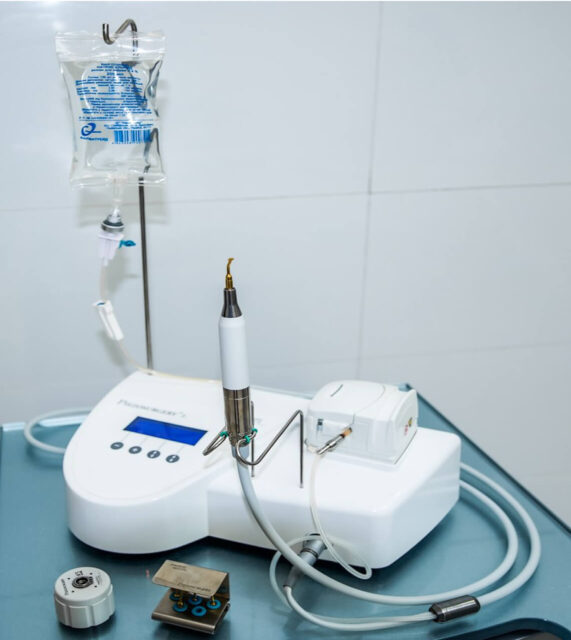
Types of bone augmentation
INLAY GRAFTING is used during tooth extraction. Bone material is placed in the extracted tooth’s socket to preserve the jaw bone volume and avoid bone resorption. This is a standard procedure for tooth extraction.
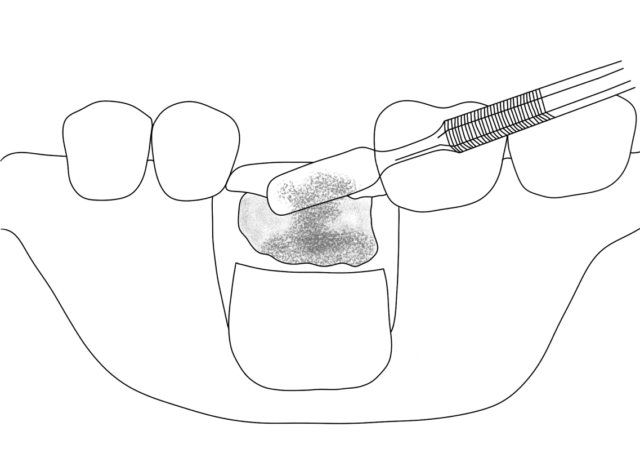
ONLAY GRAFTING. This procedure is used to restore the width and height of the residual bone. Bone material is placed on the jaw’s surface, or the jaw itself is split, and the gap between the bone fragments is filled with it.
SINUS GRAFTING. The sinus is the air space in the upper jaw (maxillary sinus) that can be used for bone grafting.
Today, bone grafting or bone augmentation has become a widespread procedure in dental surgery, which gives good results with minimum complications.
Causes of Bone Loss
The reasons may be the following:
- congenital anomalies;
- trauma;
- condition after tumor-related mandibular resection;
- mandibular resorption due to inflammatory processes;
- bone loss after tooth extraction.
After tooth loss, an alveolar bone width decrease (sagittal type) tends to occur in the upper jaw, and an alveolar bone height decrease (vertical type) – in the lower jaw. The alveolar bone can shrink to a few millimeters. Prolonged use of removable dentures significantly increases alveolar bone atrophy.
Contraindications for Bone Transplantation:
- cardiovascular diseases;
- diabetes;
- respiratory complication;
- other conditions involving poor wound healing and significantly reduced immune system response;
- illnesses connected with impaired blood clotting;
- a neoplasm or tumor;
- acute inflammation of the sinuses (sinusitis);
- foreign bodies in maxillary sinuses;
- nicotine abuse.



Reviews


FAQ
If you don’t have enough jaw bone to support an implant, how can you fix this?
There are several ways to rebuild bone loss.
The most reliable method is considered an increase with the help of the patient’s bone (from the donor site, for example, from the corner of the lower jaw, the bone tissue is carefully taken, placed in the future implantation site). This technique gives a positive result. You can also use bovine-derived xenogeneic materials. Such materials also give a positive result.
Sometimes we use synthetic materials to repair minor bone defects.
How long to wait for a tooth implant placement after bone graft?
Depending on the size of the bone defect, the amount and type of bone graft material used, implantation can be performed 4-9 months after bone graft. For example, after open sinus lifting, we place implants 9 months later and 4 months later after alveolar ridge restoration using our autologous bone.
How do I realise that there is not enough bone tissue for implantation?
Before implantation, the dentist will always refer you for a CT scan.
When analysing the CT scan, the dentist will take measurements of the remaining bone and determine whether implantation is possible and whether bone grafting is necessary.
What material is most often used in bone grafting?
Xenomaterial and allografts are most often used to fill in the missing bone volume. These bone materials look like white crystals of different sizes and are stored in sterile packages.
The gold standard is autologous bone grafting – the patient’s bone. It is taken with a particular instrument from the corner of the lower jaw, chin, iliac or tibia. This type of bone gives the best result but is traumatic and more painful.

 Out team
 Reviews
 Blog
Blog News
News Price list
 Partners
 FAQ
FAQ Vacancies
 Dental Consultation
 Tooth Decay Treatment
 Root canal treatment (endodontics)
 Orthodontics
 Dental implantation
 Dental prosthetics
 Professional oral hygiene
 Tooth Filling
 Periodontal disease treatment
 Teeth restoration
 Teeth extraction
 Surgical dentistry
 Sedation dentistry (sleep dentistry)