


Braces

Price of Braces
What is a Brace System?
A brace system is a fixed device that consists of locks (braces), tubes or rings on the molars, and arches, tied with elastic or metal ligatures or locked in a brace.
It is traditionally fixed on both jaws, in some cases on one jaw or partially. Also use different types of elastic bands for braces, such as elastic chains, intermaxillary elastic bands and various bends in the arches (if necessary).
Indications for Brace System Installation
Various abnormalities:
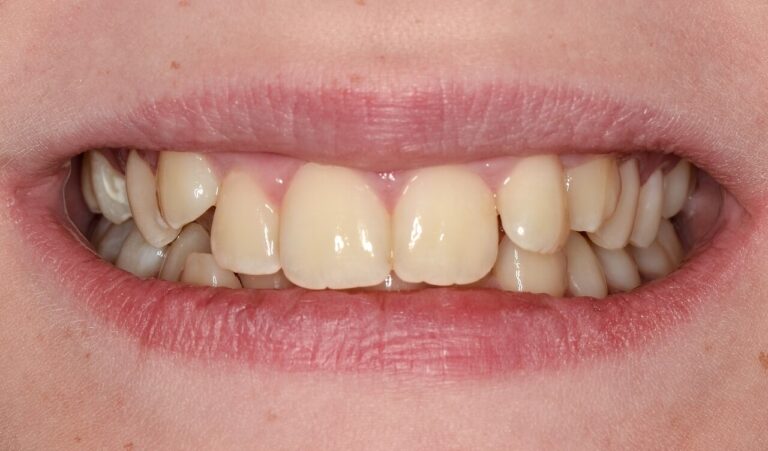
- dentoalveolar – crowding of teeth, the vestibular, palatal position of individual teeth, dystopia etc.;
- skeletal defects (distal, mesial, open, closed, crossbite);
- combined pathologies – skeletal with dentoalveolar;
- creating a place for the implant;
- impacted teeth;
- tooth abrasion;
- traumatic occlusion.
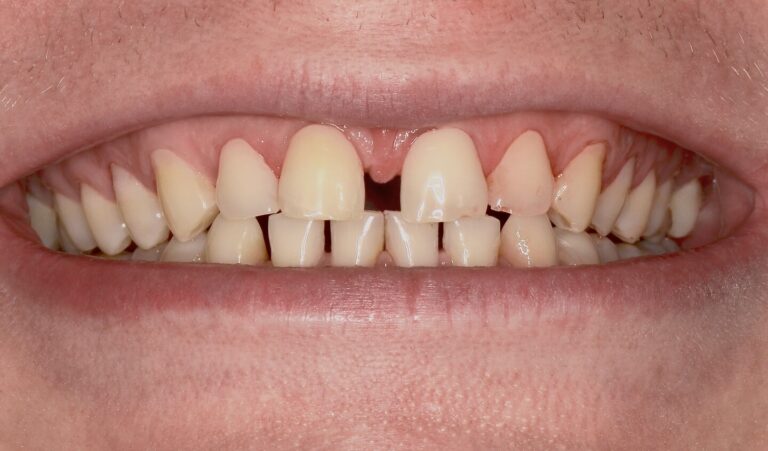
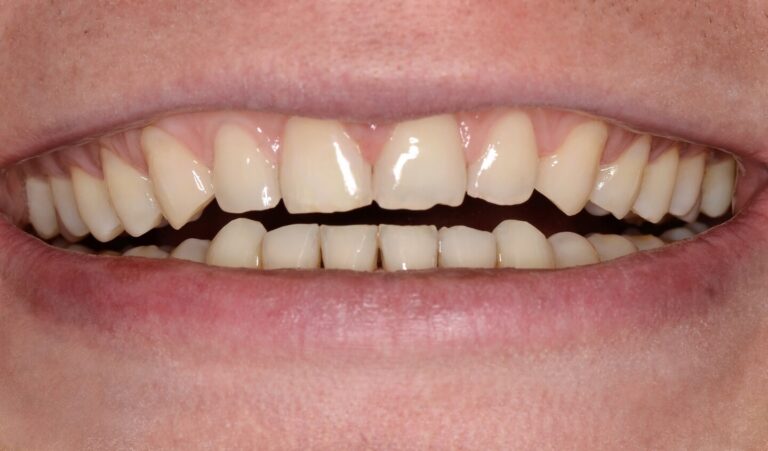
Stages Brace System Placement
- Preliminary treatment of cavities and hygiene services the day the braces are placed or the day before.
- Installing the expander in the oral cavity.
- Applying the etching gel to the teeth.
- Washing and drying the surface of the teeth.
- Applying adhesive (bond) to the etched areas. Photopolymerization.
- A small particle of the composite is applied to the bracket platform and pressed against the planned tooth site. A particular lamp is used for polymerization.
- The arch is inserted into a bracket slot, fixed in the tubes on the molars, tied with ligatures, or sealed in particular brace devices if the braces are self-ligating.
The correction is performed:
- once every 3-4 weeks for classic vestibular braces;
- once every 6-8 weeks for self-ligating (non-ligating) braces.
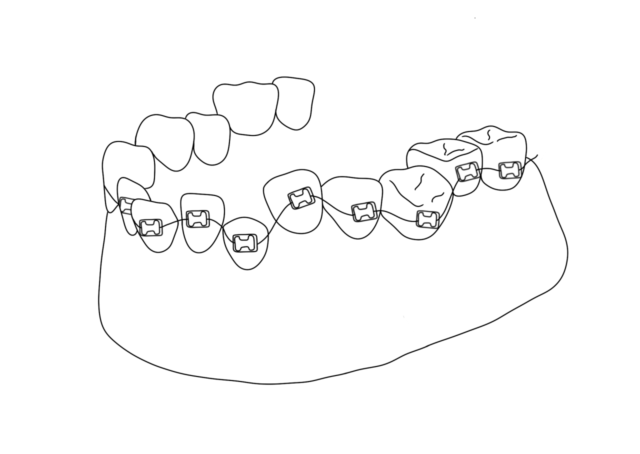
The main stages of removing braces
The procedure takes very little time and is much faster than placement.
- First, the dentist prepares the oral cavity. Then, he places a special protective silicone pad (retractor). It protects the tongue and gums during the removal of the elements of the bracket system.
- After that, the doctor opens the locks with a special tool and removes the archwire with braces.
- Further, the entire system is carefully removed using tongs. The patient may notice that the teeth are slightly mobile. This is fine; the braces have stretched the ligaments; after a short time, they will shrink, and the teeth will stop moving.
- The next step is to remove the glue from the tooth enamel. This is done using a special polishing tip (burnisher).
- The next is the enamel remineralization process (saturation with various mineral components for complete restoration).
- The last step is enamel grinding. Finally, the teeth are restored to their beautiful and healthy appearance.


Reviews


FAQ
At what age can you get braces?
It is possible to start the orthodontic treatment with braces at the age of 12-13 after the root ends of permanent teeth have formed.
Do you need to extract teeth before getting braces?
It all depends on the pathology, which your doctor determines.
Do braces damage teeth?
If the patient has excellent hygiene, then the enamel traces are minimal. Still, there is remineralization therapy (saturation of the tooth tissues with minerals to strengthen the enamel and prevent cavities) according to the indications for those who have problems.
This process is reduced when the lingual technique is applied.
What should be done after removing the bracket system?
After the end of orthodontic treatment, a retention period begins. During this period, it is essential to make a retention device (for example, a retainer, splint, or plate), which will fix and maintain the result.
Can see the result after treatment with a bracket system?
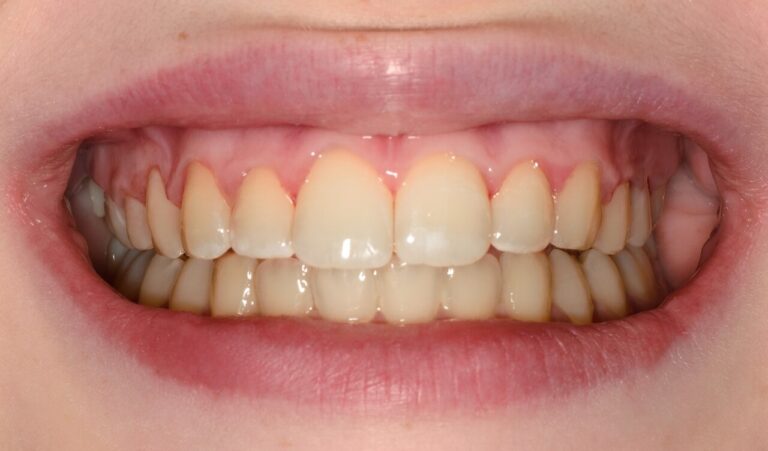
Yes, there is. After taking impressions, your expected result after treatment is simulated.
How long does treatment take?
The duration of wearing orthodontic appliances depends on the case’s complexity, age and other factors. The average treatment period is 1.5-2 years.

 Out team
 Reviews
 Blog
Blog News
News Price list
 Partners
 FAQ
FAQ Vacancies
 Dental Consultation
 Tooth Decay Treatment
 Root canal treatment (endodontics)
 Orthodontics
 Dental implantation
 Dental prosthetics
 Professional oral hygiene
 Tooth Filling
 Periodontal disease treatment
 Teeth restoration
 Teeth extraction
 Surgical dentistry
 Sedation dentistry (sleep dentistry)