


Navigational Implantation

Navigated implant surgery is a method of dental implant placement that uses computer technology to assist in the planning and precise placement of implants. The method’s essence is surgical templates and dynamic navigation systems, which allow the doctor to control the position, angle, and depth of implant placement in real time.
Main Types of Navigated Implant Surgery
Navigated implant surgery comprises two main techniques. They differ in the degree of digital planning and the method of implant placement. Each technique is selected based on the clinical situation and the patient’s anatomical features.
Static navigation (implant templates)
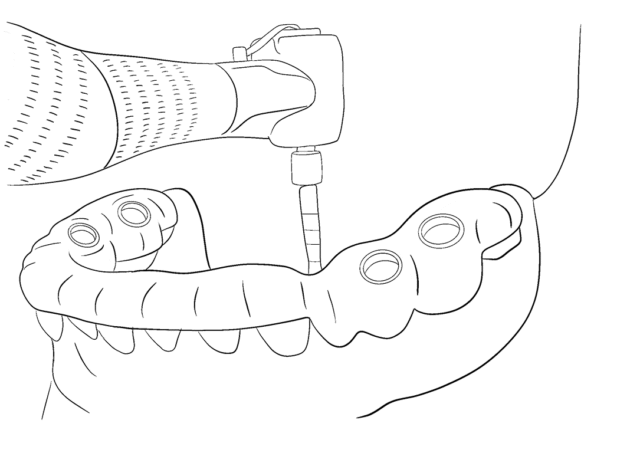
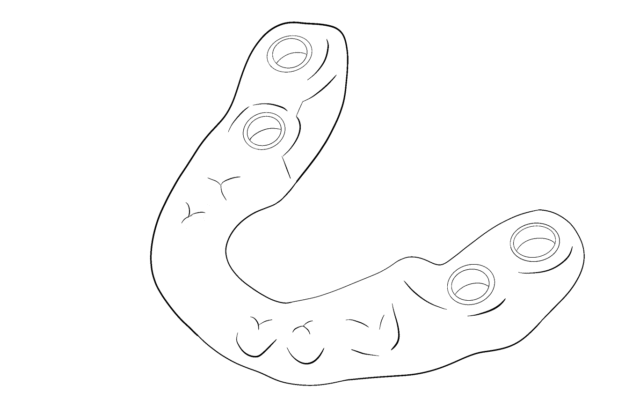
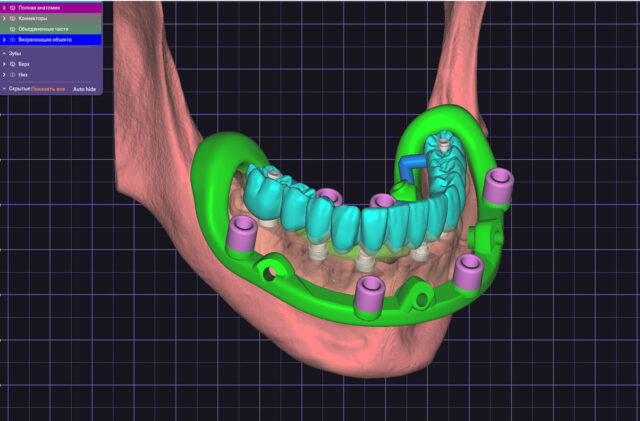
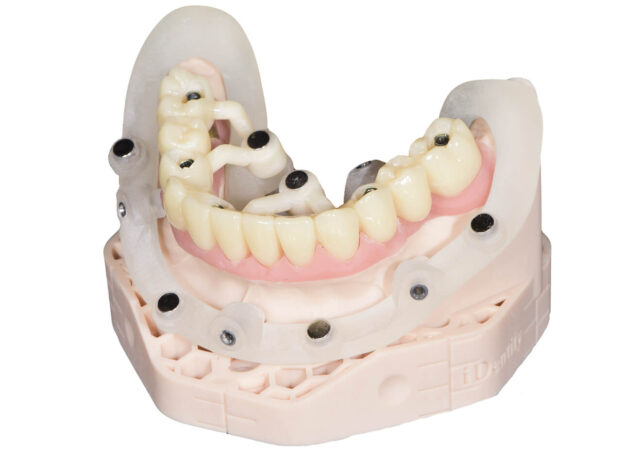
This method uses a surgical template made in advance based on CT scan results. The template is fixed in the patient’s mouth and guides milling cutters to drill the bone for the implant into pre-planned positions.
Advantages:
- Highly accurate positioning
- Reduced surgical trauma (flapless implant surgery is possible)
- Reduced surgical time for implants
Dynamic navigation
This method works in real time using a specialised navigation system (e.g., X-Guide, Navident, etc.). The dentist sees a three-dimensional model of the patient’s jaw on the screen and can adjust the position of the implant directly during the surgery.
Advantages:
- Flexibility during surgery: the implant’s angle, depth, and position can be adjusted.
- No need for a surgical template.
- Quick planning and performance.
Steps of Navigated Implant Surgery
1. Diagnosis and planning
- Cone beam computed tomography (CBCT).
- Dental scan (intraoral or laboratory scanner).
- The CBCT data and soft tissue scans are aligned in a specific software.
- Plan implant positions by taking into account the patient’s anatomy.
2. Template production (with static navigation)
- Designing a surgical template (CAD/CAM).
- 3D printing of the template or milling.
3. Surgical stage
- Template anchoring (in case of static navigation) or setting up a dynamic system.
- Drilling and insertion of the implant according to the navigation.
- Control CT scan after surgery (optional).
In our clinic, we use static navigation using surgical templates.
Advantages of Navigated Implant Surgery
- Maximum precision — errors are minimised due to 3D planning.
- Less traumatic — precise drilling reduces the risk of damage to bone and anatomical structures.
- Speed and predictability — a pre-modelled protocol speeds up the work.
- Better aesthetic results — correct implant positioning facilitates prosthetics.
- Minimal postoperative discomfort — due to reduced surgical trauma.
When Is Navigated Implant Surgery Particularly Useful?
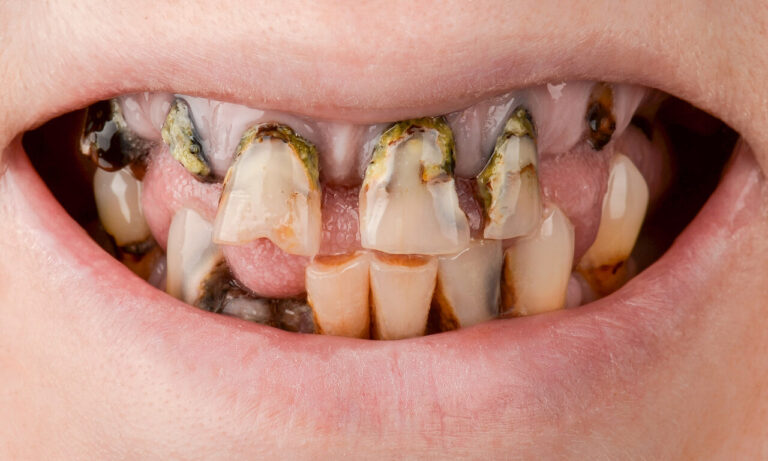
- Implant surgery in aesthetically important areas.
- Single implants in complex anatomical conditions.
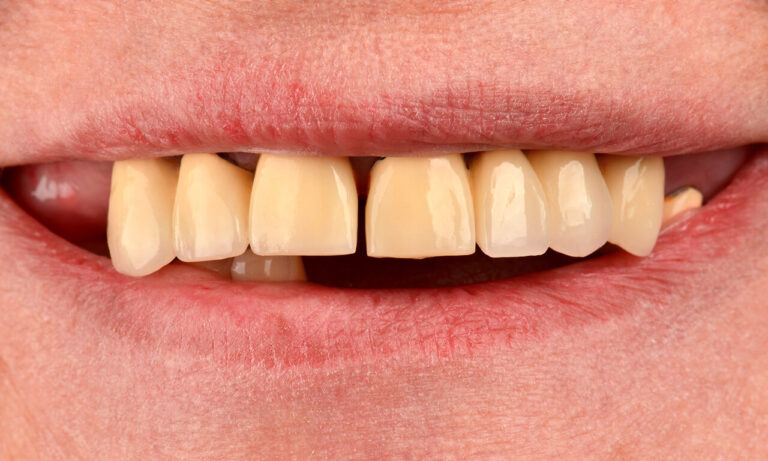
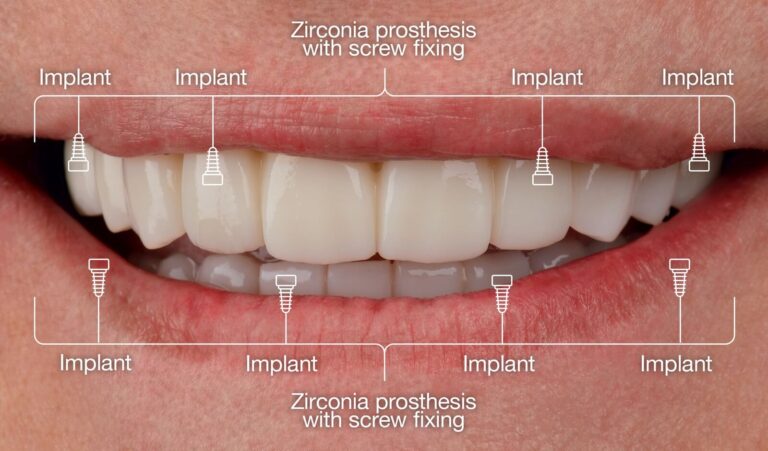
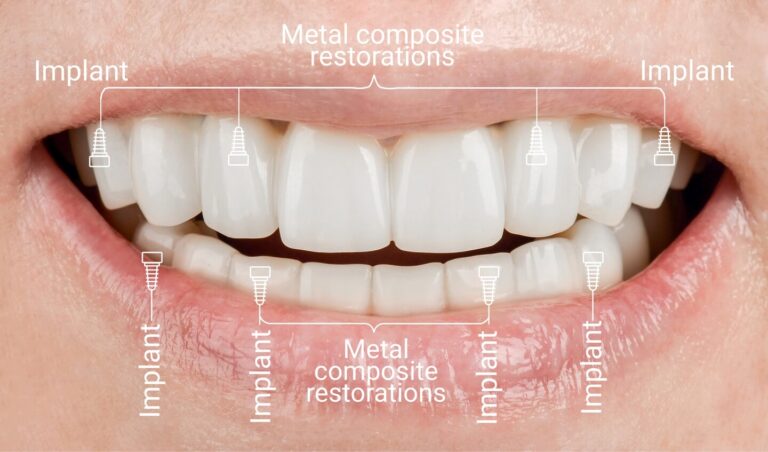
- All-on-4 / All-on-6 – total implant-supported prostheses.
- Patients with limited bone volume (to avoid bone grafting).
Surgical navigation is a method we use in dental implant surgery to improve accuracy and safety. It is often used in complex clinical cases with high aesthetic requirements.


Navigated implantology in the center of Kyiv
Our clinic offers navigational dental implant placement at 14 Patorzhynskoho Street, in the very heart of the city. It is conveniently accessible from the Zoloti Vorota, Maidan Nezalezhnosti or Khreshchatyk metro stations, as well as from the Podil and Pechersky districts.
It is also convenient to come from other cities or suburbs — Brovary, Vyshneve, Irpin. Convenient parking is available for everyone.

Reviews


FAQ
What is guided dental implantation?
It is the placement of a dental implant using 3D navigation and a surgical guide. This method ensures the procedure is performed with maximum precision, speed, and without incisions.
How much does a surgical guide for dental implantation cost?
On average, it costs between 3,000 and 7,000 UAH, depending on the complexity and technologies used.
What is a surgical guide for dental implantation?
It is a custom-made template that precisely directs the placement of a dental implant into the correct position and at the correct angle.

 Out team
 Reviews
 Blog
Blog News
News Price list
 Partners
 FAQ
FAQ Vacancies
 Dental Consultation
 Tooth Decay Treatment
 Root canal treatment (endodontics)
 Orthodontics
 Dental implantation
 Dental prosthetics
 Professional oral hygiene
 Tooth Filling
 Periodontal disease treatment
 Teeth restoration
 Teeth extraction
 Surgical dentistry
 Sedation dentistry (sleep dentistry)