


 (150)
(150)


Dentists use additional orthodontic elements to enhance the effect of wearing braces. One is elastic bands (rubber bands), which are attached to braces and help move the teeth into the correct position. Such devices are prescribed to most orthodontic patients at a particular stage of treatment. Doctors of the Clinic of Aesthetic Dentistry in Kyiv widely use orthodontic rubber bands to achieve the desired result and get a perfect smile in the shortest possible time.
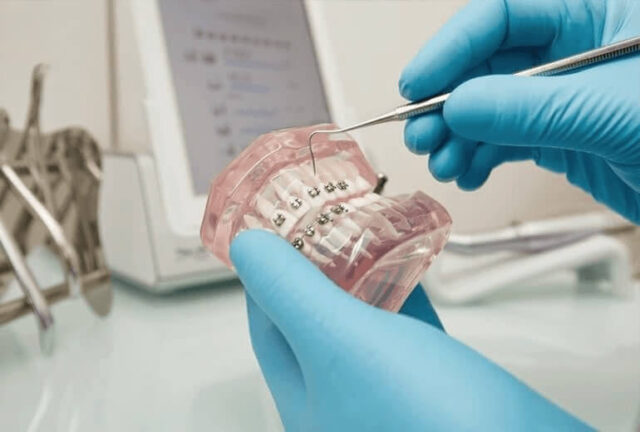
Installation of braces — jaw model
What Are Elastic Bands, and Why Are They Needed?
Elastic bands are small rubber loops attached to special hooks and buttons or directly to the braces’ locks. Sometimes, orthodontic mini-implants (orthopedic screws) are placed in the jawbone to fix the elastic bands.
The main task of elastics is to create additional traction that moves the teeth and forms a correct bite. The elastics also stimulate bone remodeling to anchor the teeth in their new position. The size, pulling force, and method of fixing the orthodontic elements determine the speed and direction of tooth movement.
Braces placement with elastic bands are indicated in the following situations:
- the need to change the position of individual teeth in a row when they are displaced vertically or horizontally, rotated around their axis;
- correction of pathological types of bite: open, distal, mesial, deep, crossbite;
- elimination of extensive gaps between teeth;
- correction of excessive crowding of teeth;
- the need to strengthen the effect of the bracket system and accelerate the movement of dental units.
Types of Orthodontic Elastics for Braces
Classic Elastics
Elastic bands are elastic bands that are large enough to be fitted to the upper and lower teeth at the same time. The products can be placed on the outer or inner surface of the tooth row, and they are always placed symmetrically on the right and left sides of the smile. These elastics are used to correct the bite and change the position of the jaws relative to each other. They are mainly used at the final stage of orthodontic treatment when the teeth are already straight, but there are irregularities in their alignment.
Elastics are the only type of braces that the patient can remove and place independently. For each case, the orthodontist selects an individual fixation scheme and shows how to fix the elastic bands. Properly applied elastic loops slightly restrict jaw movements but do not interfere with chewing and articulation.
Elastic Ligatures
Elastic ligatures are small loops fixed directly to the locks of the braces. Loosening or tightening the elastics allows you to change the pressure on your teeth and control the correct position of the arch. These elastic bands are used at different stages of orthodontic treatment when indicated.
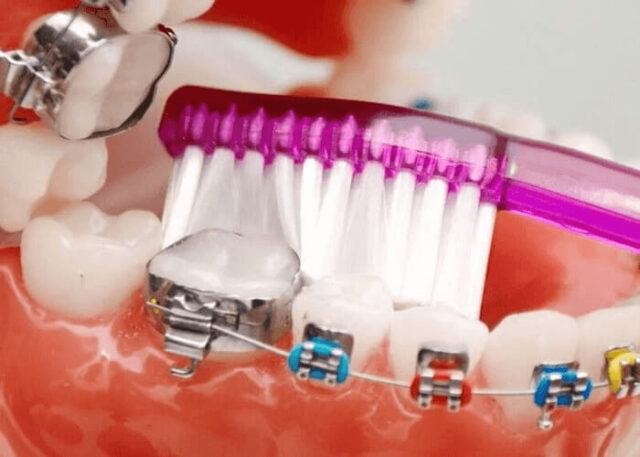
Teeth cleaning with braces
Elastic Chain Bands
A chain is a particular type of elastic traction consisting of several latex loops combined into one system. The device is used to correct gaps between teeth that are too wide (diastema, trema).
The chains move the dental units closer together and form an even smile. Elastics are worn after braces are placed in the dentist’s office, and the patient cannot remove or adjust the product independently.
Separators
Separators are the only type of elastics applied before braces are placed. Elastic bands are placed between the teeth to prepare gaps for the fixation of other orthodontic elements.
They are mainly used in the molar area – between the 5th, 6th, and 7th teeth in a row. Separators should be worn for 1-2 weeks before braces. The elastics are removed after the braces are placed, and orthodontic loops are placed in the formed interdental gaps.
What Is the Correct Way To Use Elastics for Braces?
Classic elastics are worn from 12 to 22 hours per day, so the patient must be able to remove and put them on. The rules for using elastics are as follows:
- study the elastics wearing pattern suggested by the dentist (V-shaped, square, combined);
- strictly follow the dentist’s recommendations regarding the duration of wear and replacement of elastics;
- purchase a special tool for comfortable gripping of elastics and their fixation on braces;
- wash your hands thoroughly before any manipulations with elastics for braces;
- put on and remove the elastics in front of a mirror with good lighting.
Elastic ligatures, separators, and chains are products the doctor fits and removes. The patient only needs to adhere to the doctor’s recommendations on home hygiene and dietary restrictions. Removing or adjusting the elastic bands on your own is unnecessary.
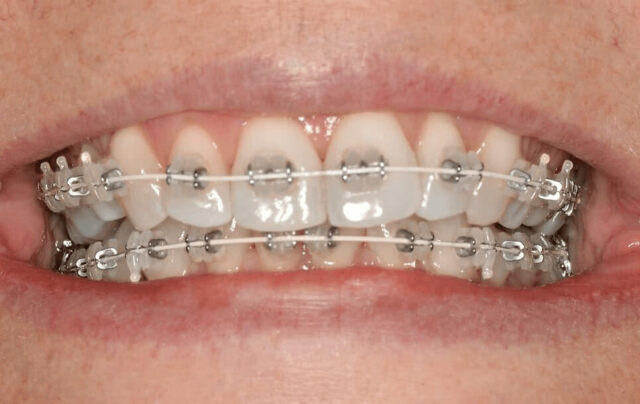
Braces care
Advantages and disadvantages of using elastics in orthodontics
Elastics for braces are an effective tool for bite correction used in most orthodontic treatment packages. They are popular due to the following advantages:
- speeding up the treatment process and reducing the overall duration of braces wear;
- precise adjustment and control of the orthodontic traction force;
- increased efficiency of orthodontic correction;
- the possibility of correcting the position of one or more dystopian teeth;
- a wide range of colors;
- hypoallergenic and safe material;
- easy and painless installation;
- affordable cost.
According to patients, the main disadvantage is discomfort while getting used to rubber bands. However, with proper selection of the type of fixation and tensioning force, adaptation takes only 1-3 days, and later on, elastic rings do not cause discomfort. Another nuance is that the material can absorb odors and staining with food pigments, so the rubber bands quickly become unusable. This problem is solved by careful hygiene and timely replacement of products. Despite some disadvantages, orthodontic elastics remain integral to bite correction and tooth alignment.
Care of Orthodontic Elastics: Tips and Recommendations
The doctor individually determines the need for removal and special cleaning of elastics. In typical cases, patients are advised to remove latex bands during meals and tooth brushing to prevent them from staining, deforming, and preventing wide mouth opening.
After removing the rubber bands, rinse thoroughly with water. To remove hard plaque, use a stiff brush and abrasive toothpaste. Dentists do not recommend using baking soda, hydrogen peroxide, or other methods of eliminating yellowish stains from elastics, as they can damage the material.
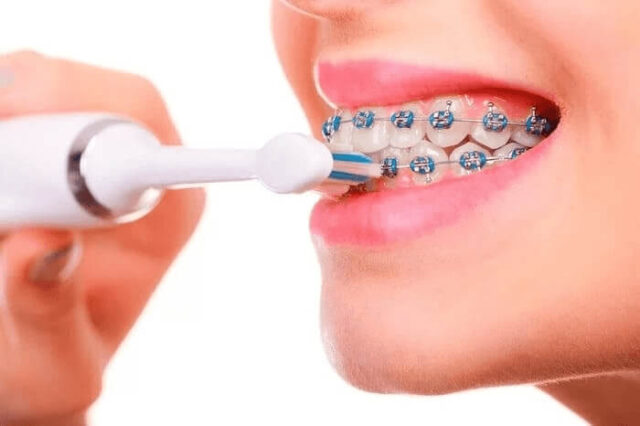
Correct teeth cleaning with braces
When wearing elastics, special attention should be paid to dental hygiene. After each meal, rinse your mouth with water and, if necessary, use flossers to remove food residues.
Every morning and evening, thorough oral hygiene is carried out using special toothbrushes and brushes for braces. Brushing is completed using a mouthwash or irrigator to remove plaque from hard-to-reach areas.
How often do I need to change the elastic bands on my braces?
The elastic material wears out quickly, so products are replaced routinely every 3-4 weeks. Ordinary elastic bands can be changed at home, and the doctor immediately gives a set of rubber bands with a stock of spares. If you run out of elastic bands, visit your dentist and get a new set. Ligature bands and chains are replaced at the same intervals during routine visits to the dentist.
Occasionally, unscheduled replacement of elastics is required. The main indications are yellowing and the unaesthetic appearance of white elastic bands for braces, stretching and deformation of products, and reduced traction or uneven traction on symmetrical parts of the jaw on the left and right. The effectiveness and comfort of treatment depend on the good condition of the elastics, so do not delay the change of elastic bands in the presence of these indications. Don’t hesitate to address your orthodontist with any questions you have.



 Out team
 Reviews
 Blog
Blog News
News Price list
 Partners
 FAQ
FAQ Vacancies
 Dental Consultation
 Tooth Decay Treatment
 Root canal treatment (endodontics)
 Orthodontics
 Dental implantation
 Dental prosthetics
 Professional oral hygiene
 Tooth Filling
 Periodontal disease treatment
 Teeth restoration
 Teeth extraction
 Surgical dentistry
 Sedation dentistry (sleep dentistry)