


 (176)
(176)

Patients looking for reliable and durable dental implants often choose options from Nobel and Alpha Bio. Nobel Biocare Holding companies manufacture these products, and they are leaders in the dental implant industry.
The manufacturer is confident in the quality of its products and gives a lifetime warranty. However, in practice, the service life of implants can be shortened due to adverse external influences and diseases of the maxillofacial system. Patients need to know what determines the length of wear and how to minimise the risk factors.
Factors Affecting the Lifespan of Implants
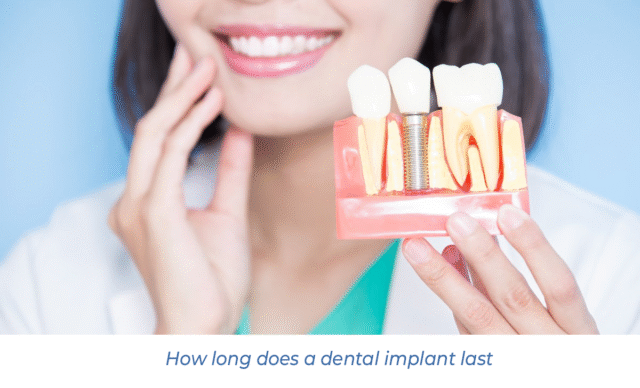
Implant treatment is a complex and multi-stage process. Mistakes at any stage can cause shortened implant lifespans and even implant rejection. How long a dental restoration lasts depends on the material and method of implant placement, the tactics of surgery, the state of the bone tissue, and compliance with recommendations during recovery.
How does the implant material affect the service life?
The product’s material determines its biocompatibility with tissues and the quality of osseointegration (engraftment). These factors play an essential role in determining service life. Dental implants made of the following materials are used in dentistry:
- Grade 4. Pure titanium contains no more than 1 per cent of alloys. It quickly takes root in bone tissue and has a minimal risk of rejection, thus ensuring a long service life. Grade 4 designs can last a lifetime with proper care and careful use.
- Grade 5. An alloy of 90% titanium with aluminium and vanadium added to increase the product’s durability. It is more likely to cause allergic reactions, so the risk of rejection is higher. However, the material is highly resistant and reliable, so it also has a lifetime of use when compatible with tissues.
Zirconium dioxide is occasionally used for dental implants. This material, which does not contain metals, is characterised by improved aesthetics and complete biocompatibility. However, it is more fragile than titanium alloys, so the guaranteed service life of zirconium products is 10-20 years.
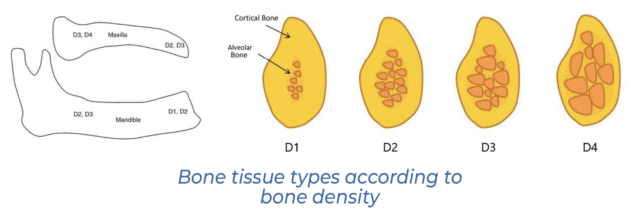
Impact of bone density on implant stability
The quality of bone tissue in dentistry is divided into four categories: D1 and D2 denote hard bone, and D3 and D4 denote soft and loose bone. Dense bone tissue ensures the implants’ good primary stability and reliable osseointegration.
The structure fuses firmly with the jaw and successfully withstands masticatory loads, increasing the expected service life. If the bone type is D3 or D4, however, incomplete fixation and displacement of the product can occur, which impairs the long-term treatment result.
How Do Nobel and Alpha Bio Technologies Extend the Lifespan?
New scientific developments and the results of clinical studies guide the manufacturers. When creating dental implants, they consider all factors that affect the longevity and usability of the components. The following technologies ensure the long-term durability of Nobel and Alpha Bio dental implants:
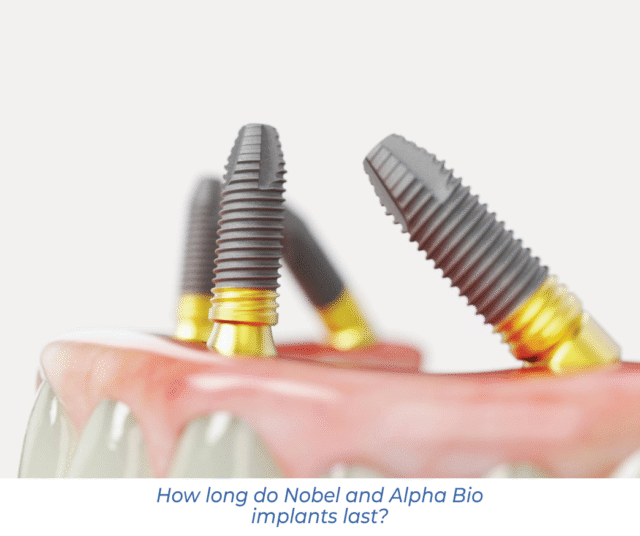
- Rough hydrophilic surface. It increases the contact area between the implant and the bone and helps form a blood clot containing growth factors. Nobel Biocare uses patented technologies: the Alpha Bio dental implant has a NiNA nano-hydrophilic surface, and the Nobel implant has a TiUltra ultra-hydrophilic surface.
- Unique thread design. It is responsible for fast and reliable fixation of the implant during surgery, high speed of osseointegration, and correct distribution of masticatory load. Nobel and Alpha Bio implants have a double thread, the design of which changes from the base to the apex of the artificial root.
- Switching platforms. This technology involves using abutments (adapters) with a smaller diameter than the base of the dental implant. This prevents bone resorption, increases soft tissue volume around the artificial root, and provides a good aesthetic result.
- Implantation with immediate loading. Special design options are used for these treatment protocols. They have high primary stability and rapid osseointegration, and are therefore suitable even for placement in soft bone. Such implants are available from the Nobel manufacturer in the NobelActive range and Alpha Bio in the MultiNeO range.
Causes of Implant Damage and Rejection
Inflammation and peri-implantitis
Inflammation in the tissues surrounding a Nobel or Alpha Bio implant is the most common cause of treatment failure. Poor oral hygiene after surgery, untreated cavities and periodontitis, and the doctor’s mistakes during the placement of the titanium elements contribute to the development of this complication.
At first, inflammation affects soft tissues, and in the absence of timely treatment, it spreads to bone tissue. This is fraught with atrophy of the jawbone, loosening of the implant, and rejection.
Mistakes during implant placement
Dental implant placement is a complex procedure that a qualified implant dentist should perform. Any violations of the surgical technique can provoke serious complications up to rejection of the unit. If the doctor lacks experience and knowledge, the following problems may occur:
- Damage to the branches of the trigeminal nerve or maxillary sinus if the implant site is chosen incorrectly;
- Trauma to the jawbone by accelerated insertion of the implant;
- Bacteria enter the wound due to poor isolation of the surgical field;
- Fracture of dental roots if the implant is placed too close to neighbouring teeth;
- Low primary stability due to incorrect selection of the implant diameter, length and insertion angle.
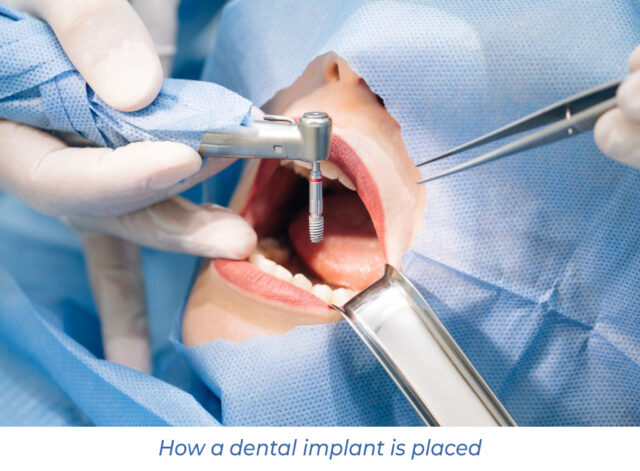
When a Nobel turnkey implant is placed, the treatment’s surgical and prosthetic phases are essential. If the implant has been placed correctly, but the dental crown is incorrectly selected or fixed too early, the lifespan of the entire structure is shortened. This is why the coordinated work of the oral surgeon and orthopaedic dentist is necessary for the long-term result of implant surgery.
How Can I Extend the Life of My Implants?
The success of smile reconstruction depends mainly on the patient’s awareness and willingness to follow the doctor’s instructions. To extend the life of Nobel and Alpha Bio implants, it is necessary to:
- perform oral hygiene twice a day using a toothbrush, mouthwash, dental floss, and irrigator;
- avoid excessive stress on the dentures: do not chew nuts, seeds and candy, do not open bags and bottles with your teeth;
- eat a balanced and varied diet, add sources of calcium, protein and vitamin D to the diet;
- monitor the general condition of the organism: control blood sugar, strengthen immunity, treat somatic diseases promptly.
Bad Habits that Shorten Service Life
Smoking and alcohol consumption are factors that negatively affect the osseointegration process and worsen the results of implant treatment. In patients with bad habits, the blood circulation of the soft tissues of the dentoalveolar area is affected, local immunity is reduced, and dry mouth is observed.
This contributes to the multiplication of pathogenic bacteria and the development of mucositis and peri-implantitis. In addition, in a state of intoxication, a person may forget about the need for careful handling of prostheses or get a mechanical trauma to the face and damage to the jawbone.
The service life of Nobel and Alpha Bio implants is shortened in patients who chew their nails or cuticles, or have a habit of chewing a pen or pencil. Such actions are fraught with overloading the prosthesis, displacement of titanium artificial roots, and developing inflammation. Another dangerous bad habit is teeth clenching, which occurs when the jaws are strongly compressed and can lead to implant loosening.
Regular Check-Ups and Prevention
After implant treatment, all patients are prescribed preventive check-ups with a dentist once every six months. At the consultation, the dentist assesses the condition of the denture and checks for symptoms of tooth decay, gingivitis, or periodontitis. It is recommended to combine a scheduled visit to the dentist with oral hygiene procedures.
Using special tools, the doctor removes hard dental deposits that cannot be cleaned at home. This allows maintaining the cleanliness and health of teeth, preventing peri-implantitis and rejection of dental implants.
Patients are advised to be attentive to their oral health and to contact a doctor in case of alarming symptoms. The reasons for immediate consultation with a dentist are mucous membrane redness and swelling, contact bleeding, severe pain in the prosthesis area, and pus discharge from under the gum. Timely treatment of such conditions will save the implant and avoid more severe consequences.




 Out team
 Reviews
 Blog
Blog News
News Price list
 Partners
 FAQ
FAQ Vacancies
 Dental Consultation
 Tooth Decay Treatment
 Root canal treatment (endodontics)
 Orthodontics
 Dental implantation
 Dental prosthetics
 Professional oral hygiene
 Tooth Filling
 Periodontal disease treatment
 Teeth restoration
 Teeth extraction
 Surgical dentistry
 Sedation dentistry (sleep dentistry)