


 (141)
(141)
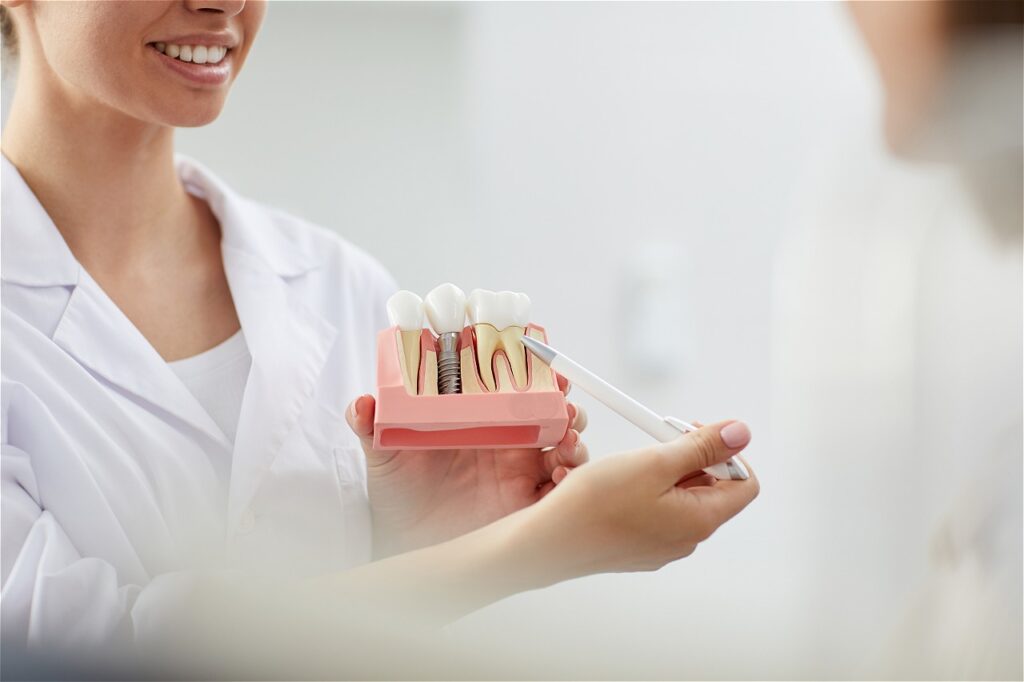

Osteoporosis affects every third woman and every fifth man over the age of 50. Since patients in this age group most often need to restore lost teeth, the issue of dental implant surgery with osteoporosis is highly relevant.
Contrary to popular belief, the disease is not an absolute contraindication for dental implants. This article explains in what cases smile reconstruction is possible and what methods are used to increase the chances of treatment success.
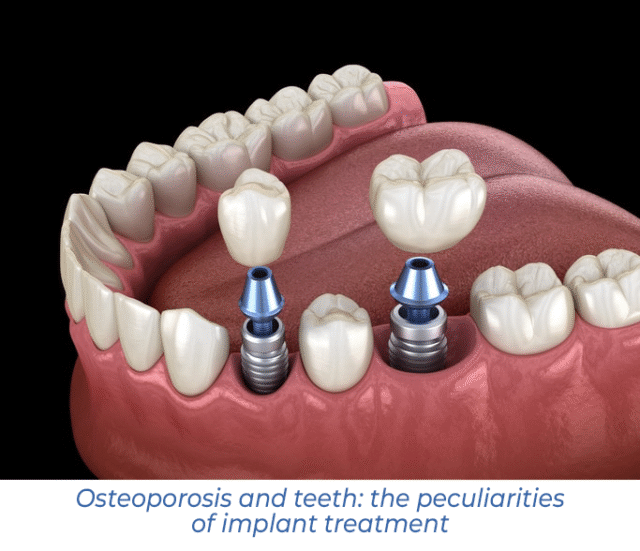
The impact of osteoporosis on the maxillofacial system
In osteoporosis, bone metabolism is disturbed, the calcium content of the skeleton is reduced, and bone destruction occurs faster than the creation of new tissue. Bones thin out and become less dense, so the patient begins to have chronic pain and increases the risk of fractures. The pathological process affects all parts of the musculoskeletal system, including the dental and mandibular system.
The main dental consequences of osteoporosis are:
- decreased mineralisation and atrophy of jaw bones;
- thinning of tooth enamel;
- multiple dental cavities;
- increased tooth sensitivity;
- progression of chronic periodontitis;
- loose teeth.
Insufficient bone density and thickness are the leading causes of difficulties in dental implantation. Patients with osteoporosis are at increased risk of displacement or rejection of the artificial root, development of inflammatory processes, and destruction of bone tissue.
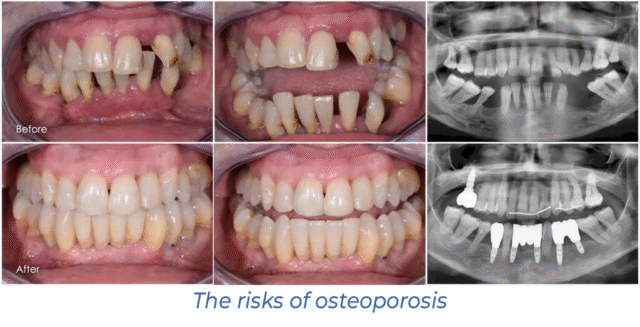
When is implant surgery possible with osteoporosis?
For the placement of dental implants in osteoporosis, the following conditions must be met:
- Sufficient bone volume and density. Bones must be a certain height and width to safely fix artificial titanium roots. If there are signs of atrophy, the patient should undergo osteoplasty to increase the jaw volume. In low mineralisation, measures are taken to strengthen the bone tissue.
- Refusal of the use of bisphosphonates. These drugs help with osteoporosis, but after surgical manipulations, they can cause a serious complication—acute necrosis of the jaw. Implantation is carried out before the start of the therapy course or after its completion. Before dental procedures, the patient must obtain the attending physician’s permission.
- Absence of other contraindications. Patients with osteoporosis may have different conditions that prevent implant surgery. These include immunodeficiencies, malignant tumours, psychosis, and severe neurological disorders. Temporary contraindications are acute infections and inflammatory processes in the oral cavity.
If the clinical situation does not meet these criteria, the dentist will offer alternative options for smile reconstruction that do not require bone damage. To replace lost teeth, a bracket, removable dentures or bridges are used. The dentist can say which method is better to choose – removable prosthesis, implant or bridge – only after consultation and 3d-computer tomography.
Modern implant methods for osteoporosis
Implant treatment in patients with osteoporosis requires more careful preparation and planning of the surgery. Modern dentistry has specific types of implants and methods of implant placement that increase the likelihood of successful osseointegration, allowing the procedure to be performed in many patients with bone structure disorders.
Basal implant surgery – advantages and features
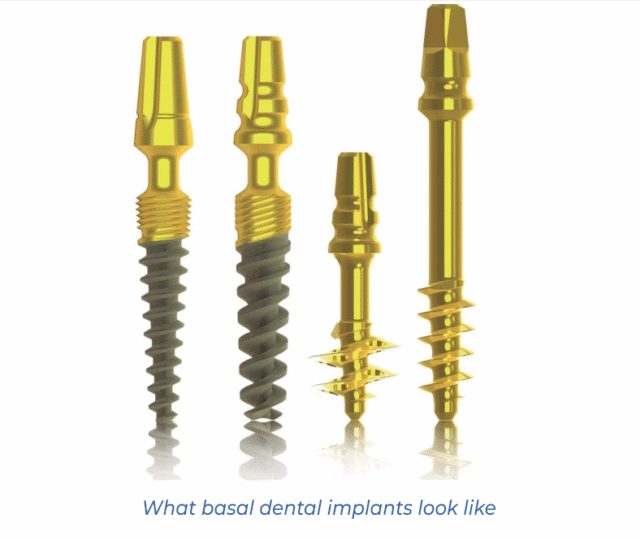
In the standard method of implant placement, the doctor inserts the titanium structure into the spongy jaw layer. However, the cancellous bone softens with osteoporosis and cannot hold the artificial tooth root. To solve such a problem, dental implants are placed into the basal layer of bone, a dense tissue that provides stability to the entire structure.
Basal dental implants have a special configuration that allows them to be securely fixed in the jaw. They are made as a non-disassembled system consisting of a titanium artificial root and an adapter (abutment) for fixing the prosthesis.
Such products are recommended without 3 or more teeth in a row, including for reconstruction of the smile in case of complete edentulism. These implants do not require bone grafting, which reduces the treatment time and financial costs for the patient.
All-on-4 method: What is the technology?
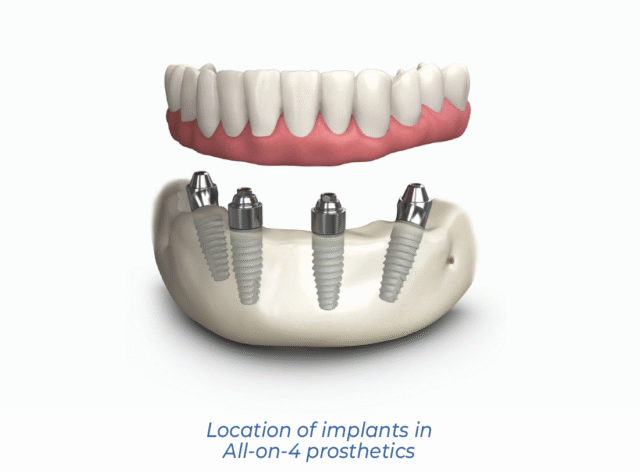
All-on-4 implant surgery restores the dentition when all teeth are lost. Only 4 implants are used to fix the prosthesis: 2 are placed vertically in the frontal area, and 2 more are fixed at an angle in the chewing areas. This modern and effective technology allows you to get a beautiful and functional smile.
An important advantage of the All-on-4 technique is the possibility of placing implants even in osteoporosis without bone augmentation. The places of fixation of titanium products are selected individually, considering the degree of bone atrophy and anatomical features of the dentoalveolar system. For prosthetics, a bar is used, which distributes the load evenly and increases the stability of the implants.
Two-stage implantation – is it worth choosing?
Osseointegration is slower in people with osteoporosis than in those with good bone quality. Therefore, two-stage surgery is considered a safer and more reliable treatment option.
In this case, the titanium structure is grafted before loading with the prosthesis, which reduces the risk of displacement and loss of the implant. The main disadvantage of such a protocol is the lengthening of the treatment period. Until the osseointegration is complete, the patient must walk with a defective tooth row or use a removable denture.
Rehabilitation after implant surgery
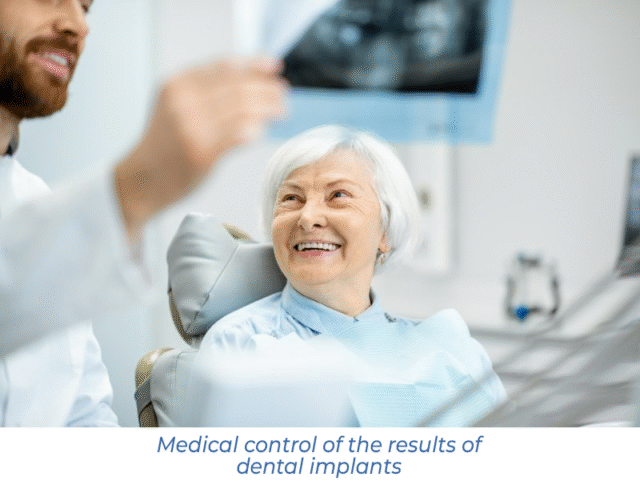
Recovery after implant placement is an essential stage of treatment that affects the speed and quality of implant healing. On average, osseointegration takes 6 months, but this period can increase if there is significant softening and damage to the bone tissue. In addition, patients with osteoporosis are more susceptible to developing postoperative complications than those in good health.
To minimise the risk of complications, during the rehabilitation period, it is recommended to:
- take antibiotics and rinse the mouth with antiseptics to prevent inflammation;
- avoid taking bisphosphonates and other medications that may interfere with the process of dental implant engraftment;
- have a balanced diet and take supplements to strengthen the bone tissue;
- avoid any situations that may cause trauma to the implant site: careless brushing, eating hard food, hobbies that can traumatize and contact sports;
- monitor the general state of health and timely correction of existing disorders.
Care of implants with osteoporosis
Basic rules of hygiene and prevention of complications
Regular home hygiene is crucial for good osseointegration and the long life of dental implants in patients with osteoporosis. It prevents dental deposits, which serve as a breeding ground for bacteria and cause inflammatory complications such as mucositis and peri-implantitis. After implant surgery, patients should:
- Brush teeth 2 times a day, paying attention to all surfaces of the tooth row and hard-to-reach places;
- Use toothpastes with anti-inflammatory and healing ingredients;
- Use floss and brushes to remove plaque from between the teeth;
- Use irrigators and mouthwashes to improve dental hygiene.
Visit your dentist for a check-up and professional oral cleaning at least once every six months. Regular professional hygiene is necessary to remove plaque in hard-to-reach areas that cannot be cleaned with a brush. Special tools are used to remove all hard deposits (tartar) to reduce the risk of peri-implantitis, gingivitis, and periodontitis.
What type of food can help strengthen bone tissue?
The long-term results of implant surgery for osteoporosis depend on the condition of the bone and the rate of progression of the disease. Foods rich in calcium, vitamin D and other valuable nutrients are recommended to increase bone density. The patient needs to increase the consumption of:
- yoghurt, cottage cheese, soft and hard cheeses, other dairy products;
- eggs;
- legumes;
- green leafy vegetables;
- lean poultry;
- oily marine fish;
- wholemeal porridge and bakery products;
- dried fruit.
In osteoporosis, it is necessary to limit products that contribute to calcium leaching from the body. These include coffee, tea and other drinks containing caffeine, sweet soda, and alcohol.
Excess sugar and salt in the diet and frequent use of dishes with trans fats also hinder calcium absorption. Following a balanced diet has a favourable effect on the condition and implant surgery results.



 Out team
 Reviews
 Blog
Blog News
News Price list
 Partners
 FAQ
FAQ Vacancies
 Dental Consultation
 Tooth Decay Treatment
 Root canal treatment (endodontics)
 Orthodontics
 Dental implantation
 Dental prosthetics
 Professional oral hygiene
 Tooth Filling
 Periodontal disease treatment
 Teeth restoration
 Teeth extraction
 Surgical dentistry
 Sedation dentistry (sleep dentistry)