


 (117)
(117)

Dental implant surgery is a complex, multi-step procedure that aims to restore lost teeth and the functionality of the surrounding tissues. Two conditions are necessary to fulfil this task: sufficient jawbone volume and healthy gums.
If there is a tissue recession, it is replenished surgically. Sinus lift and other methods are used to build up bone tissue. The problem with gum thickness is solved with gingivoplasty.
Why Is Gum Grafting Important After Implant Surgery?
While the bone must hold the implant and distribute the chewing load correctly, the gum’s primary functions are to protect it, provide access to nutrients, and prevent infection from reaching the artificial root.
The Role of Soft Tissue in Implant Protection
The gum consists of three zones:
- Marginal (0.8-2.5 mm). It is located in the maxillary region and has a smooth surface.
- Alveolar (1-9 mm). It is fused to the bone lined with keratinised epithelium.
- Coronal. ‘Interdental papillae’ covered with non-keratinized epithelium.
When the gingiva around the artificial root has the correct structure and sufficient volume, it can ensure:
- aesthetics;
- nourishment of the jawbone;
- support of the prosthesis;
- protection of the implant from microbes and prevention of rejection.
Aesthetic and medical benefits of the procedure
The gingival correction allows you to create the ideal shape and contour. After soft tissue restoration, the transition to the implant looks as natural as possible, and the teeth look proportional and harmonious. In addition to volume restoration, the dental surgeon can remove excess gum in case of gum recession (loss).
Gingivoplasty after implant surgery strengthens the implant and prevents soft tissue deformation and exposure of the necks of neighbouring teeth.
Main Indications for the Procedure
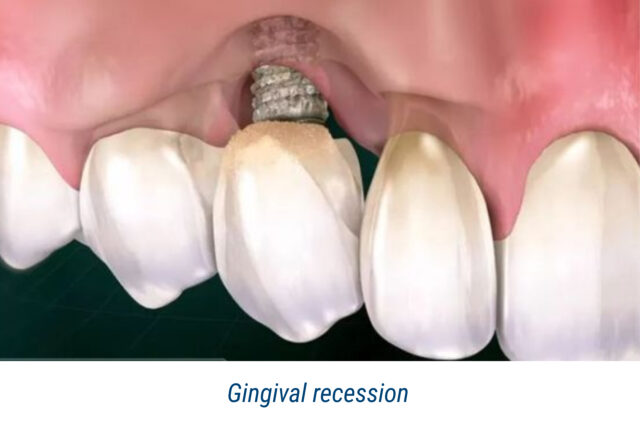
Gingival recession is most often performed when the gingiva is receding due to various factors:
- 1. Initial lack of soft tissue thickness. It can be caused by a long absence of a tooth, mechanical pressure when using dentures, or physiological features of the body (thin gingival biotype).
- Incorrect Implant surgery. Inexperienced doctors can make several mistakes: mechanically damage the gingiva, overstretch the tissues during suturing, incorrectly place a temporary prosthesis, etc.
- Implant exposure. If there is a lack of alveolar gingiva or poor after-surgery care, the soft tissues detach from the bone, forming pockets.
Usually, the volume of the gum is restored before implant surgery. But suppose the moment was missed, and the artificial structure was exposed. In that case, plastic surgery is performed sometime after the titanium root is implanted, with preliminary elimination of inflammation.
Types of Gingivoplasty
Different methods help carry out gingivoplasty. The main trends are:
- Using the patient’s tissues.
- Transplantation of donor tissues.
- Application of membranes or matrices made of collagen.
Each technique has its pros and cons.
Flap Surgery
This method involves forming a flap of epithelial tissue from the upper palate or the inner side of the patient’s cheek. The use of autografts not only provides restoration of the necessary volume of the gum. Using the patient’s material completely excludes the presence of an allergic component, which can lead to graft rejection.
Use of Donor Tissue
Material of animal origin or another person sometimes can adequately replace the patient’s tissues. Its use eliminates the problem of the regeneration of wound surfaces, which is relevant when taking an autograft.
The disadvantage of donor material is that it is considered unstable behaviour in the long term.
The doctor decides which method to use, considering the clinical situation, probable risks and expected results.
How Is Gum Grafting Performed?
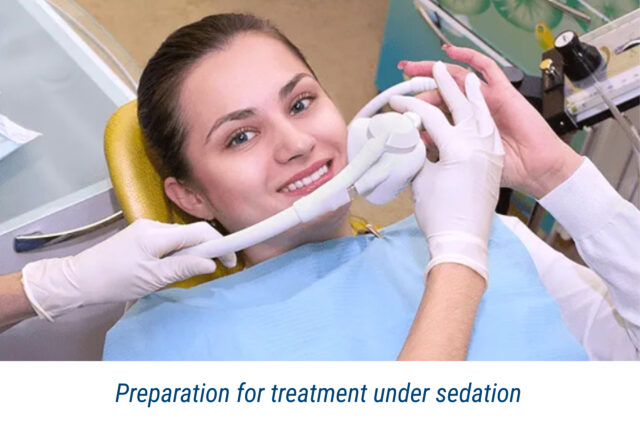
Depending on the intervention’s complexity and the dentist’s chosen technique, the procedure can last from half an hour to 60 minutes. It is performed under local anaesthesia. Patients who feel anxious before surgical manipulations should undergo treatment under sedation. In a state of medicated sleep with anaesthesia of the working area, a person does not experience stress and discomfort.
Surgical Procedure Stages
- Anaesthesia. When choosing anaesthesia, the patient’s age and weight are considered. Information about allergies to medications is necessarily identified.
- Preparation of autograft, donor tissue or collagen membrane for gingival augmentation.
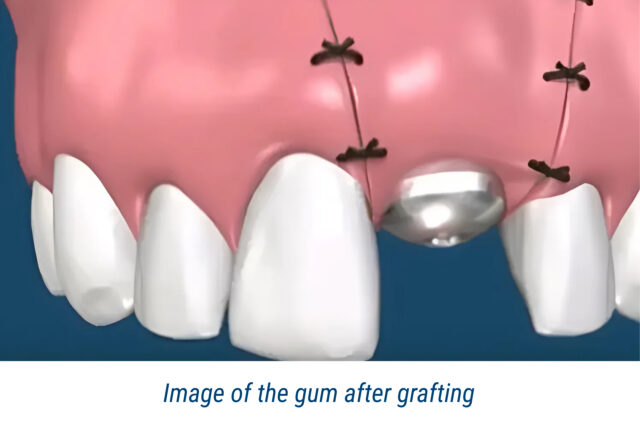
- Gingivoplasty. The volume of the gingiva in case of tooth-neck exposure and implant exposure is increased using a flap. In the presence of excess soft tissues, an excision (gingivectomy) is performed.
- The flap is fixed with sutures.
Post-Procedure Care
After surgery, the patient must necessarily take the drugs prescribed by the doctor. The superficial layers of the gum heal in 10-14 days, and then the sutures are removed. Full recovery can take up to 6 months.
General recommendations for care:
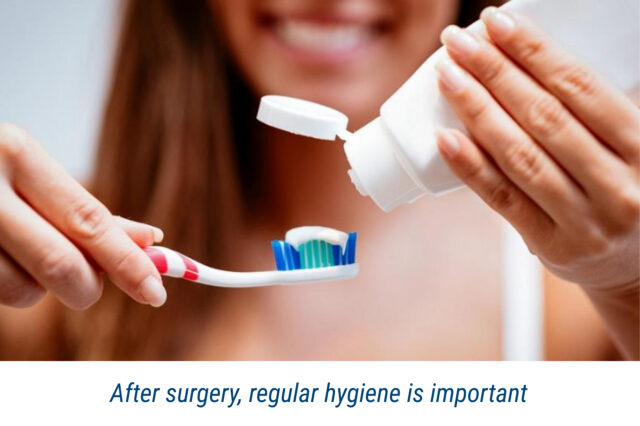
- On the first day, hygiene consists of rinsing the mouth. It is not allowed to make sharp movements.
- Use a soft brush and paste with an anti-inflammatory effect; do not touch the operated area when brushing your teeth.
- After each meal, rinse your mouth with water and antiseptic products. Swish the solution into your mouth, hold it for a few minutes, and spit it out. The liquid should be slightly cooled.
- After consulting your doctor, apply wound-healing gel lotions to the gums.
- Use infusions of medicinal herbs (chamomile, sage, goat weed) or oak bark for mouthwash.
Possible Complications and Prevention
After gingivoplasty, soft tissue pain, redness, and swelling may persist for 2-3 days. These symptoms are considered normal, but they gradually decrease in manifestation. You can apply cold to the cheek for a few minutes to alleviate discomfort.
If the bleeding is prolonged, the swelling does not go away or even increases, the gum has sagged again, and the implant has become mobile, the attending physician must be contacted immediately.
Ignoring the problem leads to the spread of the inflammatory process from the soft tissues to the jawbone.
Possible complications:
| Pathology | Features | Symptoms |
| Mucositis | The first stage of implant rejection.
Only soft tissues are involved in the inflammatory process |
|
| Peri-implantitis | Progressive bone loss around the jaw.
The implant becomes mobile and loses its function. |
|
It is necessary to follow the doctor’s recommendations to avoid complications and accelerate the regeneration process.
For the first 2-3 weeks, it is essential to avoid smoking and alcohol. Exposure to tobacco smoke and tar negatively affects the periodontium and slows down tissue healing. Alcoholic beverages irritate the mucous membranes of the oral cavity and are contraindicated while taking antibiotics.
If you are prone to bleeding, you should temporarily refuse to do sports, going to the bath and sauna. Taking hot baths is also not recommended.
After the surgery, the first meal should not be eaten before the anaesthesia has worn off. Chewing should be on the opposite side. During the regeneration period, stick to your diet: avoid hard, tough, sour, salty, and spicy foods. The diet should be balanced so that the tissues can regenerate better.



 Out team
 Reviews
 Blog
Blog News
News Price list
 Partners
 FAQ
FAQ Vacancies
 Dental Consultation
 Tooth Decay Treatment
 Root canal treatment (endodontics)
 Orthodontics
 Dental implantation
 Dental prosthetics
 Professional oral hygiene
 Tooth Filling
 Periodontal disease treatment
 Teeth restoration
 Teeth extraction
 Surgical dentistry
 Sedation dentistry (sleep dentistry)