



Surgical dentistry

Surgical dentistry
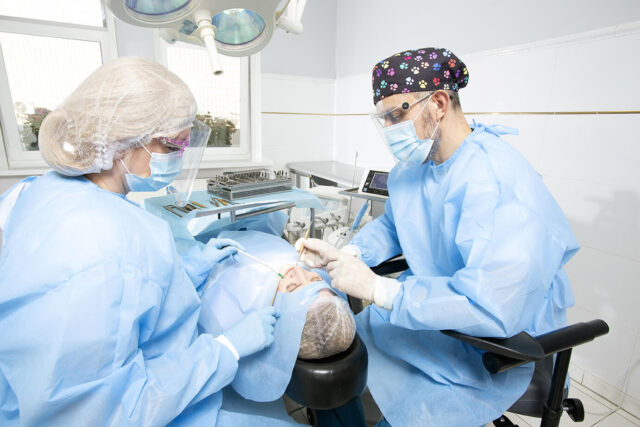
Dental surgery is a branch of medicine that specializes in oral surgery. General dentists can also perform these procedures. However, they will refer you to a dental surgeon in more complex cases. Such doctors have undergone appropriate additional training in dental surgery.
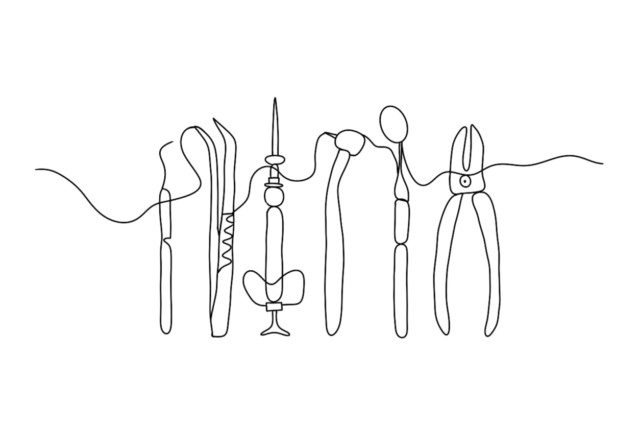
What does surgical dentistry do
Dental surgery covers a wide range of treatments in the oral cavity.
These include:
- removal of wisdom teeth,
- extraction of significantly damaged teeth,
- apicoectomy (surgical removal of the root tip of a tooth),
- dental implants,
- osteotomy of teeth,
- frenuloplasty of the lips and tongue,
- soft tissue grafting,
- bone augmentation (jawbone reconstruction),
- sinus lifting,
- removal of mucosal or jaw cysts,
- treatment of fractures,
- treatment of abscesses in the oral cavity,
- surgical treatment of periodontal disease, and much more.
Thus, dental surgeons play an essential role in the diagnosis, prevention, and surgical treatment of diseases, injuries, and anomalies in the oral cavity and maxillofacial area.


Reviews


FAQ
How do I realise that there is not enough bone tissue for implantation?
Before implantation, the dentist will always refer you for a CT scan.
When analysing the CT scan, the dentist will take measurements of the remaining bone and determine whether implantation is possible and whether bone grafting is necessary.
What material is most often used in bone grafting?
Xenomaterial and allografts are most often used to fill in the missing bone volume. These bone materials look like white crystals of different sizes and are stored in sterile packages.
The gold standard is autologous bone grafting – the patient’s bone. It is taken with a particular instrument from the corner of the lower jaw, chin, iliac or tibia. This type of bone gives the best result but is traumatic and more painful.
Is the upper lip frenotomy procedure painful?
Most often, children and adults find the procedure easy to tolerate. It is performed under anaesthesia and is entirely painless. The first two to three days after plastic surgery may involve slight swelling and discomfort when touching food. After the sutures are removed after seven days, patients usually forget about the procedure.
How long to wait for a tooth implant placement after bone graft?
Depending on the size of the bone defect, the amount and type of bone graft material used, implantation can be performed 4-9 months after bone graft. For example, after open sinus lifting, we place implants 9 months later and 4 months later after alveolar ridge restoration using our autologous bone.
Is it always necessary to have a sinus lift for bone deficiencies?
No, not always. If the residual bone height is at least 6 mm, we often use various techniques, such as elevating the maxillary sinus floor, expanding bone by osseodensification, and using short implants. The choice of technique depends on the clinical situation.
How long after the treatment of maxillary sinusitis or ENT surgery can a sinus lift be performed?
We usually perform sinus lifts 6 months after the end of treatment for ENT pathology. This is the average. Your primary care physician determines the timing of the surgery.
For which pathology should I see a dental surgeon as an inpatient?
There are outpatient and inpatient surgical appointments.
Inpatient maxillofacial surgery deals with the most complex pathologies that require the patient to be under observation. These include purulent infections (phlegmons, abscesses), jaw fractures, tumours, salivary gland disorders, etc.
A qualified dental surgeon in an outpatient clinic always knows when to refer a patient to the hospital.

 Out team
 Reviews
 Blog
Blog News
News Price list
 Partners
 FAQ
FAQ Vacancies
 Dental Consultation
 Tooth Decay Treatment
 Root canal treatment (endodontics)
 Orthodontics
 Dental implantation
 Dental prosthetics
 Professional oral hygiene
 Tooth Filling
 Periodontal disease treatment
 Teeth restoration
 Teeth extraction
 Surgical dentistry
 Sedation dentistry (sleep dentistry)