



Root Canal Filling

Price of Root Canal Filling
What Is a Root Canal Treatment
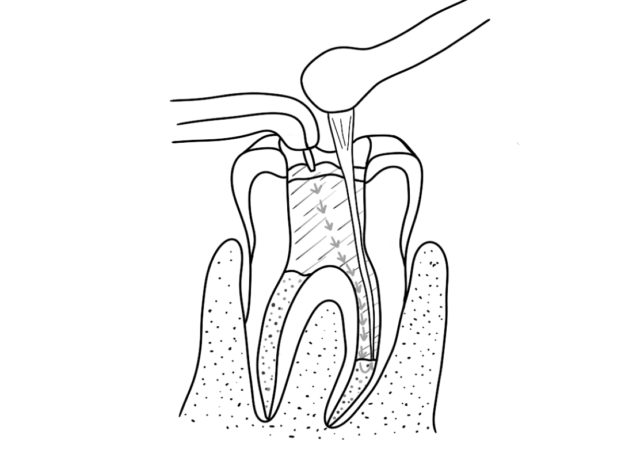
Root canal treatment (obturation) is a procedure to seal the root canals of a tooth using specific materials such as gutta-percha and epoxy cement. This procedure is carried out after removing infected pulp, prevents secondary infection from entering the tooth’s root, and minimizes the risk of acute inflammation. Canal obturation is a key step in endodontic treatment, ensuring the tooth’s life and functionality. It also contributes to the patient’s overall oral health, helping prevent further dental problems and ensure long-term dental health. Canal fillings allow you to preserve your tooth and chew without feeling discomfort.
Root Canal Filling
After a thorough root canal treatment, the tooth is ready for the final stage of treatment — permanent filling.
Modern protocols use a combination of dense filler (gutta-percha) and sealer (cement, bonding paste) for root canal filling. The primary role of the filling material is to fill the central canal and its wall microroughness and additional branches, which are features of the canal anatomy.

Requirements for the filling material
The following requirements are applied to the filling material:
- precise adherence to the walls of the canal;
- biocompatibility to the tooth tissues and beyond (periapical), i.e. a material that does not irritate;
- X-ray contrast;
- bacteriostatic;
- does not stain the tooth;
- stable in size and insoluble in tissue fluid.
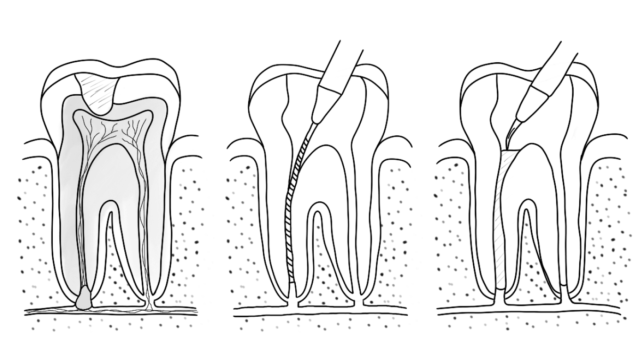
If we consider the situations of an individual approach to filling, we must highlight the special conditions of the root: excessively exposed root tip (apex) and the presence of perforation of the canal wall.
Features of the procedure
If we consider the situations of an individual approach to filling, we must highlight the special conditions of the root: excessively exposed root tip (apex) and the presence of perforation of the canal wall.
To close such holes, in addition to the classical filling, a dentin-like material is used, super solid and biocompatible, which serves as an airtight plug and replaces the natural part of the root, allowing the canal to be filled without the risk of leakage.
After canal filling, tooth sensitivity is tolerated for a few days, so excessive chewing pressure is not recommended to avoid additional compression trauma with increased pain. If such symptoms occur, you should contact your endodontist immediately.



Reviews


FAQ
Are root canals treatment painful?
Currently, all dental procedures possibly causing painful sensations are performed under anesthesia. You do not need to worry and tensely expect that the doctor is about to “touch the nerve,” local anesthesia helps not think about the sensations during the procedure.
Root canal vs. extraction: what’s the difference?
Root canals are located within the roots of the teeth, holding them in the jaw. The roots remain, and the canals inside of them are cleaned and sealed.
Why do I need root canal treatment if my tooth doesn’t hurt?
It is not uncommon to have the canals re-treated due to poor previous treatment. The resealing can occur after the treatment, causing root canal infection, making periodontal disease visible through an X-ray. Modern standards of primary root canal treatment almost eliminate the need for further retreatment.
Earlier, during root canal treatment, a doctor would replace the medication inside the tooth, but how is it treated now?
The root canal treatment method requiring a change of medication for more than 4 weeks is hopelessly outdated. 1-2 visits are enough for most endodontic treatment cases.

 Out team
 Reviews
 Blog
Blog News
News Price list
 Partners
 FAQ
FAQ Vacancies
 Dental Consultation
 Tooth Decay Treatment
 Root canal treatment (endodontics)
 Orthodontics
 Dental implantation
 Dental prosthetics
 Professional oral hygiene
 Tooth Filling
 Periodontal disease treatment
 Teeth restoration
 Teeth extraction
 Surgical dentistry
 Sedation dentistry (sleep dentistry)