



Clasp denture
Price of a clasp prosthesis
What are clasp dentures
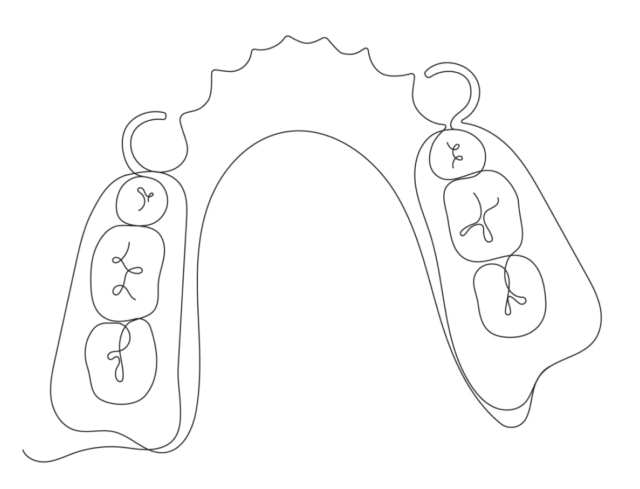
The basis of this structure is metal with a plastic layer. Composite crowns are placed instead of missing teeth. The clasp prosthesis fixes with attachments or clasps.
Advantages and disadvantages of clasp dentures
Advantages:

reliable fixation;

wearing comfort;

ensuring uniform chewing load;

ease of maintenance.

long-term adaptation;

you need to take them out.
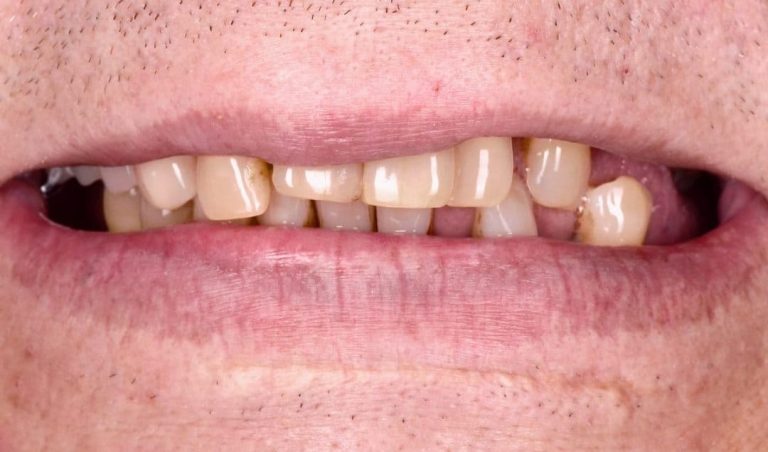
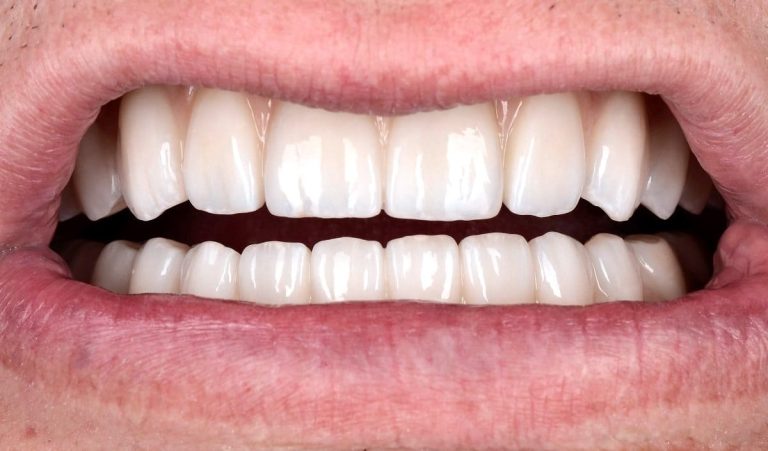
Clasp denture supported by implants
They are fixed on 2-4 artificial roots, completely imitating natural teeth. They are fixed with micro locks.
A patient can independently remove the prosthesis to clean it if necessary.
Advantages:
- reliable fixation;
- do not injure gums;
- comfortable to wear;
- even distribution of chewing load.
Disadvantages:
- long-term adaptation (engraftment of implants lasts 3-6 months).


Reviews


FAQ
What is the lifespan of removable dentures?
The service life of removable dentures depends on the type of denture, the materials used, the quality of care and the patient’s characteristics. On average, dentures last 5-7 years. The main reasons why they need to be replaced are as follows:
- material loss (abrasion of the chewing surface);
- changes in the shape of the gums and atrophy of the bone tissue, due to which the denture ceases to fit tightly;
- loss of aesthetic appearance (discolouration, damage).
What are the disadvantages of a complete removable denture?
Removable complete dentures have several disadvantages affecting comfort, aesthetics, and functionality. Here are the main ones:
- weak retention, often requiring the use of creams or gels;
- it takes time to get used to the denture; dentures can rub on the gum;
- can cause soreness or inflammation, especially initially;
- the denture may partially cover the palate, which reduces the sensitivity of the taste buds;
- may cause articulation difficulties in the first few weeks of use.
How quickly do you get used to bugle (clasp) prosthesis?
Adaptation to bugle (clasp) prosthesis takes different amounts of time depending on the individual patient. On average, adaptation takes 2-4 weeks, but in some cases, it can take up to several months. Initially, the patient feels slight discomfort, problems with articulation, increased salivation, and slight prosthesis mobility when chewing.
These will eventually disappear, and after a few weeks, the patient will feel comfortable with the denture.

 Out team
 Reviews
 Blog
Blog News
News Price list
 Partners
 FAQ
FAQ Vacancies
 Dental Consultation
 Tooth Decay Treatment
 Root canal treatment (endodontics)
 Orthodontics
 Dental implantation
 Dental prosthetics
 Professional oral hygiene
 Tooth Filling
 Periodontal disease treatment
 Teeth restoration
 Teeth extraction
 Surgical dentistry
 Sedation dentistry (sleep dentistry)