


Removable prosthetic teeth
Price of removable dental prosthetics
What are dental prosthetics?
This is the restoration of missing teeth or their fragments using preparatory restorations, fixed structures (veneers, inlays, crowns, and bridges fixed on teeth or implants), and removable dentures (partial, complete removable dentures, immediate dentures, clasp dentures).
Partial prosthetics are considered in case a patient still has remaining natural teeth. If all the teeth are missing, a complete removable denture is fitted. Dentures can be attached to implants, which is called an Implant-Supported Denture. Such dentures can be removable, partial, and cement-retained.
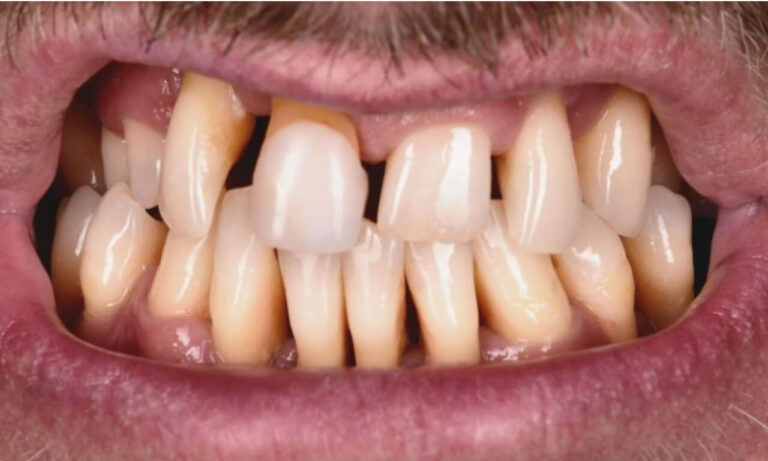
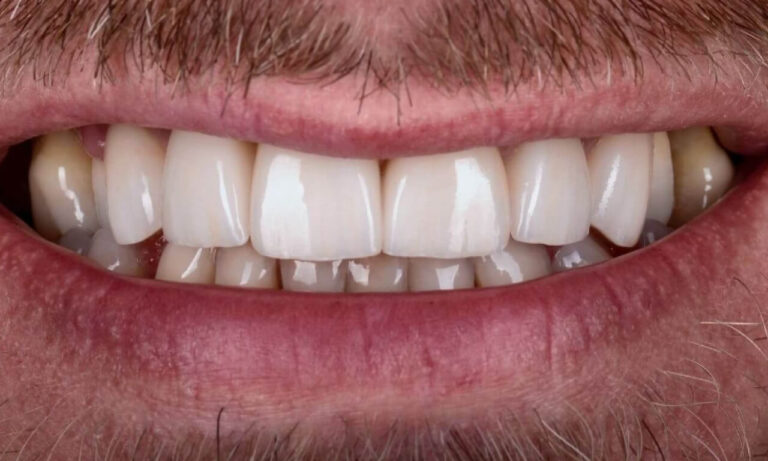
What are Complete Dentures, Removable Partial Dentures, and Bridges?
All removable dentures consist of a pink plastic base on which plastic, composite or ceramic teeth are fixed.
The type of manufacturing material classifies the following options for removable dentures:
- Nylon. Such material is completely biocompatible and suggests maximum aesthetics.
- This type of removable denture can be manufactured from the following materials: acrylic, Spofadent, IvoBase, Vertex, and Deflex.
- With metal fasteners (clasp).
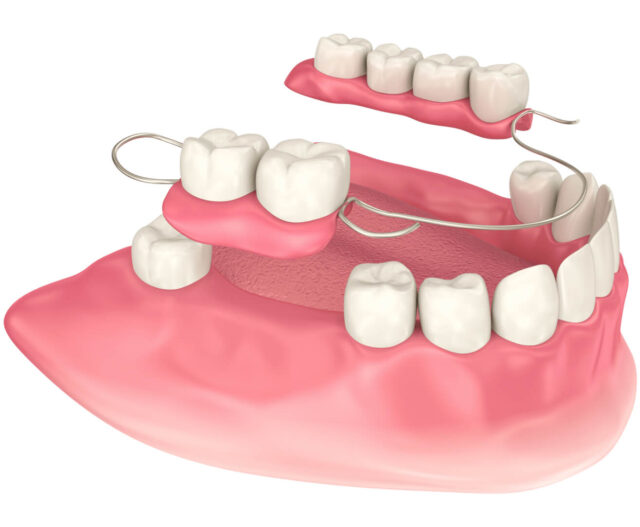
How Removable Dentures Are Attached
Several factors influence the way the removable dentures are fixed. Such factors include:
- degree of mobility, size, and position of the tongue in the oral cavity;
- some anatomical features of the prosthetic bed, palate, and alveolar ridge;
The following types of fixation methods are used to fix removable dentures in the oral cavity:
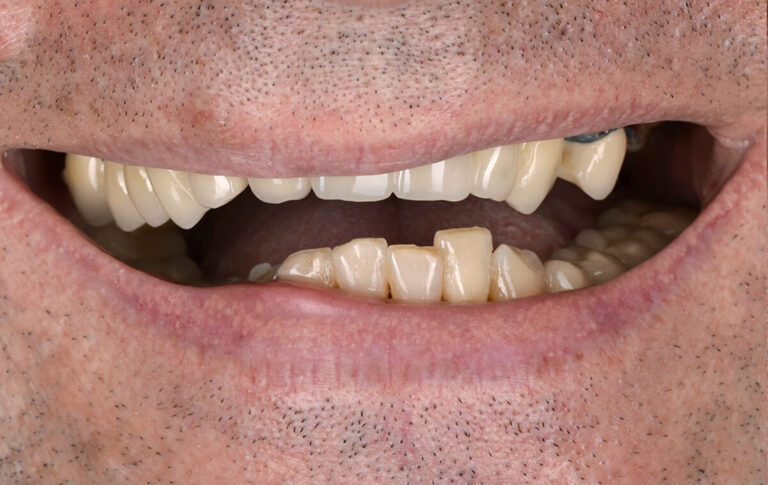
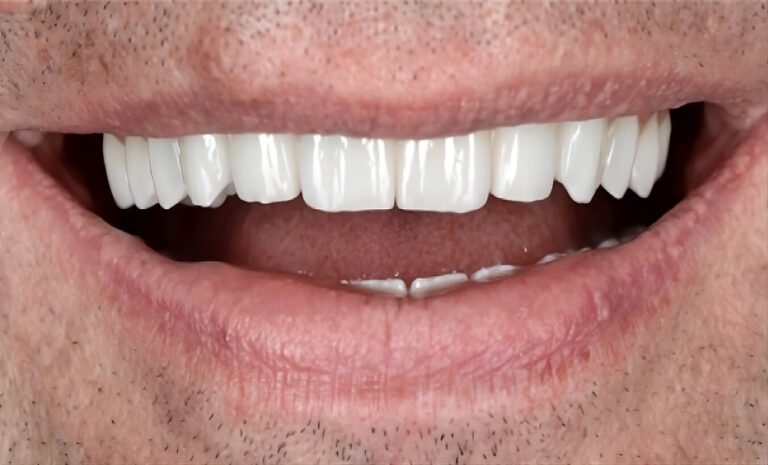
Attachments or locks. This fixation method is not often used when installing removable dentures, but it is often used when installing fixed structures. Attachments can be used for partial edentulism when there are no more than two teeth in the patient’s mouth. The patrix or fitting part of the attachment can be located in the root or crown part of the abutment tooth.
Clasps and hooks. This type of fitting is used mainly for removable prosthetics, and the fixing devices and the dentures are made of similar material. Acrylic, polyurethane, and nylon dentures have fixation devices, while removable clasp dentures are equipped with metal hooks.
Suction cup or flexible dentures. This method of attachment is used when installing a complete denture or overdenture. The attachment mechanism of such devices is based on the adhesion or natural vacuum effect of suction.
Implants. Removable implant-retained dentures can be fixed by a bar or ball attachment.
Disadvantages of complete dentures

The denture in the upper jaw blocks the palate, which can result in a partial loss of the taste sense and sometimes a feeling of nausea;

A complete removable denture is fixed only with glue; it is not particularly stable and can move during chewing; this can negatively affect speech and mastication;

It should be brushed after every meal.

Fast manufacturing;

Feasible for almost every patient;

Suitable in case of poor oral hygiene.
A bugel prosthesis is a removable partial denture attached to the remaining natural teeth by cast metal clasps or locks.
This prosthesis frame is a pink plastic base with attached plastic, composite or ceramic teeth is welded made of an alloy for medical applications.
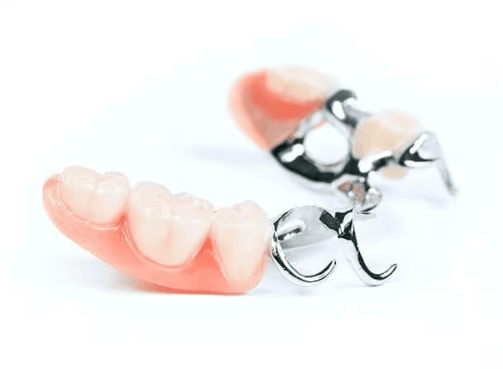
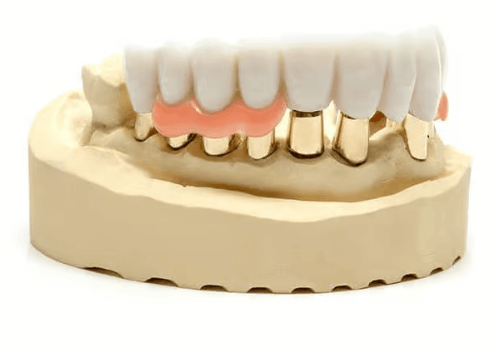
A telescopic denture is also a removable denture attached to natural teeth and implants. Unlike the bugel prosthesis, it does not have clasps or locks. It has the so-called telescopic crowns consisting of two parts, allowing fixing it.
The primary crown (inner telescope) is attached to a natural tooth or implant and is made of metal. The secondary crown (outer telescope) is embedded in the partial denture and is fitted over the primary crown along with the denture.
Stages of Denture Manufacturing
- Dental examination of the oral cavity and treatment assignment.
- Preparation and treatment of the oral cavity. Before fixing the prosthesis, treating cavities and gum disease and removing the abutment teeth nerves are necessary. Then, if required, the crown part of the abutment teeth is restored, and the wisdom teeth are removed.
- If necessary, the abutment teeth are prepared (the top layer is removed and aligned).
- A special silicone mass is applied, and an impression for the prosthesis is taken.
- Manufacturing of a collapsible plaster model of the prosthesis. It is the basis for creating a temporary plastic prosthesis.
- Trying on and fitting the prosthesis. Next, the patient tries on a temporary prosthesis, and a dentist identifies its possible shortcomings. Next, the doctor specifies the shade of enamel and the position of the teeth.
- Refinement of the prosthesis. Making a permanent structure.
- Fitting and checking the permanent prosthesis. If necessary, make adjustments to the product.


Reviews


FAQ
What is the lifespan of removable dentures?
The service life of removable dentures depends on the type of denture, the materials used, the quality of care and the patient’s characteristics. On average, dentures last 5-7 years. The main reasons why they need to be replaced are as follows:
- material loss (abrasion of the chewing surface);
- changes in the shape of the gums and atrophy of the bone tissue, due to which the denture ceases to fit tightly;
- loss of aesthetic appearance (discolouration, damage).
What are the disadvantages of a complete removable denture?
Removable complete dentures have several disadvantages affecting comfort, aesthetics, and functionality. Here are the main ones:
- weak retention, often requiring the use of creams or gels;
- it takes time to get used to the denture; dentures can rub on the gum;
- can cause soreness or inflammation, especially initially;
- the denture may partially cover the palate, which reduces the sensitivity of the taste buds;
- may cause articulation difficulties in the first few weeks of use.
How quickly do you get used to bugle (clasp) prosthesis?
Adaptation to bugle (clasp) prosthesis takes different amounts of time depending on the individual patient. On average, adaptation takes 2-4 weeks, but in some cases, it can take up to several months. Initially, the patient feels slight discomfort, problems with articulation, increased salivation, and slight prosthesis mobility when chewing.
These will eventually disappear, and after a few weeks, the patient will feel comfortable with the denture.

 Out team
 Reviews
 Blog
Blog News
News Price list
 Partners
 FAQ
FAQ Vacancies
 Dental Consultation
 Tooth Decay Treatment
 Root canal treatment (endodontics)
 Orthodontics
 Dental implantation
 Dental prosthetics
 Professional oral hygiene
 Tooth Filling
 Periodontal disease treatment
 Teeth restoration
 Teeth extraction
 Surgical dentistry
 Sedation dentistry (sleep dentistry)