


Lingual braces

Lingual braces
Straight teeth are not only the beauty of a smile, but also a health concern, as an abnormal bite leads to other dental, GI and ENT problems. For those who have been putting off correcting their bite with a braces system, the Clinic of Aesthetic Dentistry offers an excellent solution – Incognito invisible lingual braces. They are fixed only on the inner side of the tooth row, so no one around you will see the elements of the orthodontic appliance.
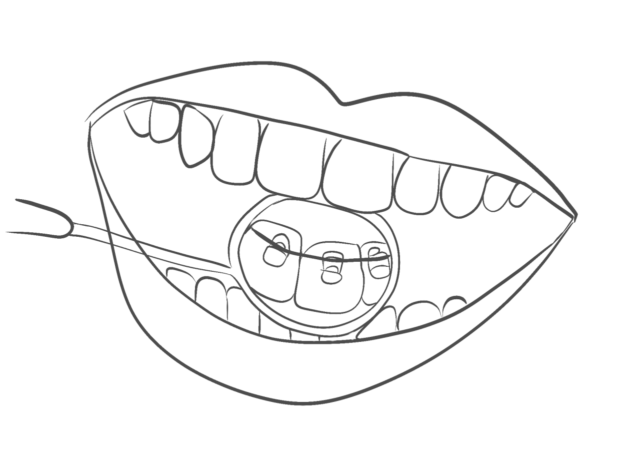
The process of placing the inner part of the system
- Consultation with an orthodontist to assess your bite irregularities and create a treatment plan.
- Taking high-precision impressions, dental photography and taking radiological images of the dental rows.
- Transferring medical data to a German laboratory to create a customised brace system.
- Installation of lingual braces by indirect method with the use of customised mouth guards.
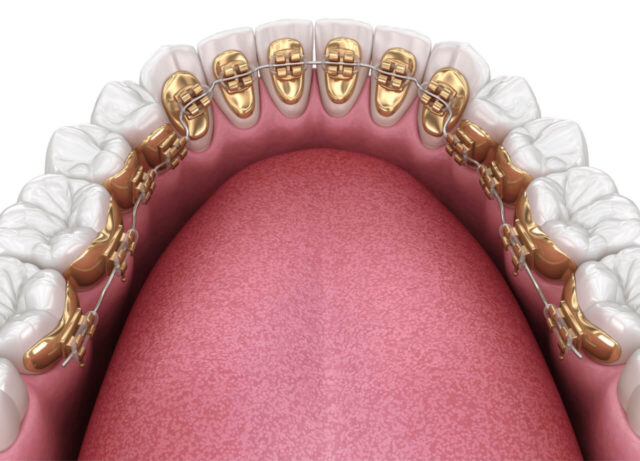
Advantages Over Traditional Braces
Incognito is the most modern and high-tech option of lingual braces, which was developed by the German company T.O.P. Service fur Lingualtechnik GmbH. The orthodontic system has become popular in many countries around the world due to its advantages:

Invisibility. Braces are invisible when talking, smiling and laughing, so they are ideal for public figures and anyone who is embarrassed to wear standard bite-correcting structures.

Comfort. The elements of the system protrude no more than 2 mm above the tooth surface, so patients get used to the braces in just 2-4 weeks.

Safety. Hypoallergenic alloy containing 60% gold is used for production, which does not cause local adverse reactions and does not traumatise the tongue.

Speed of treatment. Thanks to the innovative design and careful selection of the lingual system, the period of teeth alignment will be the same as when wearing classic vestibular braces.

Customisation. Each system is made according to impressions and pictures of the teeth in a German laboratory. Computer modelling techniques are used to ensure a perfect fit and high bracket effectiveness.
A breakdown of Lingual Brace Design
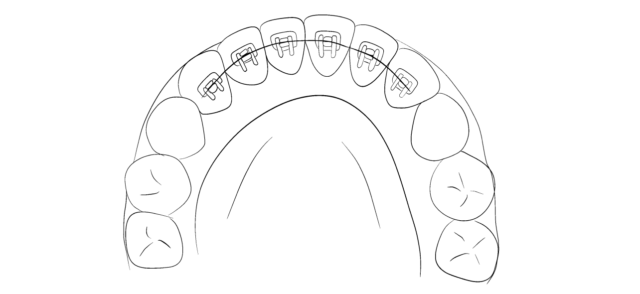
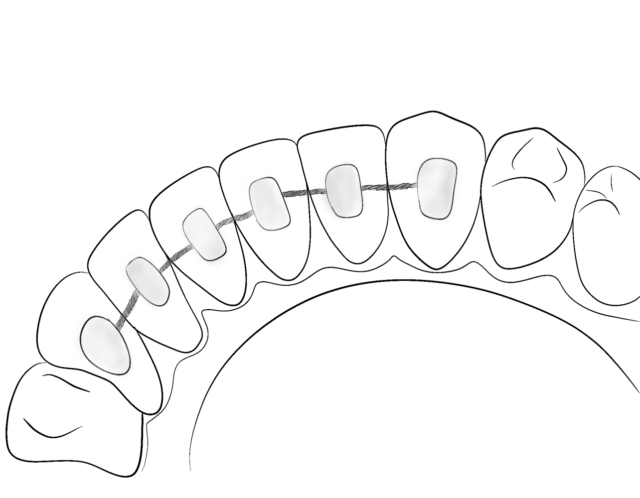
The Incognito system is similar in structure to other types of braces. It consists of flat plates and locks that are fixed to each tooth. The orthodontic elements are connected to each other by a curved arch, which exerts pressure on the teeth and helps them move. Incognito systems feature a flat, lightweight design that provides a comfortable wearing experience.
Indications for Use
Lingual braces successfully cope with the following problems:
- pathological bite: deep, open, crossbite, distal, mesial;
- protruding front teeth;
- misalignment of one or more teeth;
- wide interdental spaces;
- crowded teeth.
This type of orthodontic treatment is especially recommended for teenagers, as they often have hygiene problems and the outer surface of the tooth enamel is thin and fragile. Lingual braces are attached to a stronger inner surface, which is not damaged once the metal plates are in place.
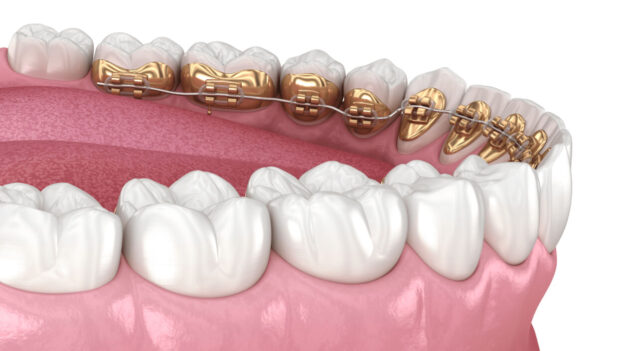
Care of the unique braces system
The special design simplifies daily hygiene and reduces the risk of tooth decay on the inner surface of the teeth. Care of the lingual orthodontic system is not complicated, but requires the patient to be disciplined and follow the doctor’s recommendations.
Oral hygiene is performed twice a day and includes the following steps:
- brushing all surfaces of the teeth with a soft brush and toothpaste recommended by the doctor;
- using orthodontic V-shaped brushes to better remove plaque from the lingual surface of the teeth;
- flossing to clean the spaces between teeth;
- using an irrigator to remove food particles from the hardest to reach places;
- rinsing the mouth with fluoride mouthwash to strengthen enamel.
During the course of treatment with lingual braces it is necessary to visit the orthodontist every 1-2 months to monitor progress and to activate (adjust) the system to the current position. The schedule of visits to the doctor is personalised for each patient.


Reviews


FAQ
What are the particularities of lingual braces care?
For the period of treatment it will be necessary to avoid nuts, seeds, sticky sweets, and all solid foods should be cut into small pieces before eating. After each meal, you should rinse your mouth with water. To keep your teeth clean and prevent tooth decay, it is recommended to visit a dentist for professional dental hygiene every 3 months.
How long will treatment with lingual braces take?
The average duration of treatment is 18-24 months. However, each case is individual, so this question should be asked to the orthodontist during the consultation.
Will there be pain when using lingual braces?
The installation procedure is painless. During the wear of the braces, there may be pain and discomfort caused by the movement of the teeth. The intensity of the sensations depends on the pain threshold and the severity of the bite abnormalities.

 Out team
 Reviews
 Blog
Blog News
News Price list
 Partners
 FAQ
FAQ Vacancies
 Dental Consultation
 Tooth Decay Treatment
 Root canal treatment (endodontics)
 Orthodontics
 Dental implantation
 Dental prosthetics
 Professional oral hygiene
 Tooth Filling
 Periodontal disease treatment
 Teeth restoration
 Teeth extraction
 Surgical dentistry
 Sedation dentistry (sleep dentistry)