


 (158)
(158)
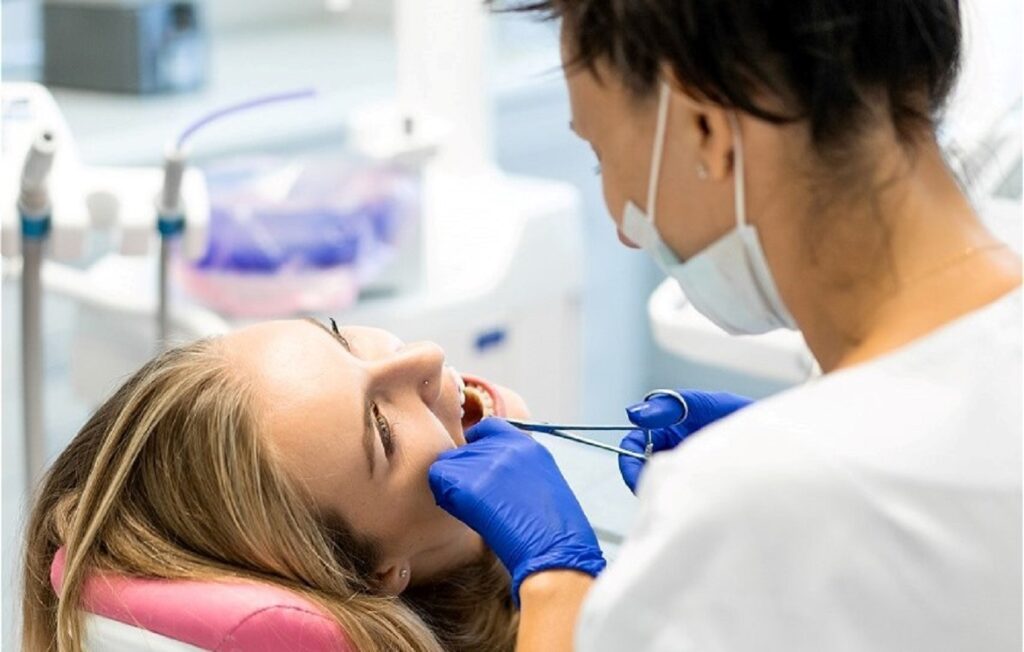

The feeling of numbness (paresthesia) of the cheek, gum, and tongue is familiar to every dental patient. Decreased sensitivity is accompanied by tingling, burning, and a sensation of goosebumps crawling. In most people, the symptoms go away within a couple of hours after a visit to the doctor, but some patients suffer from discomfort for a long time. Next, you will learn which cases of prolonged loss of sensation are possible and what to do in such a situation.
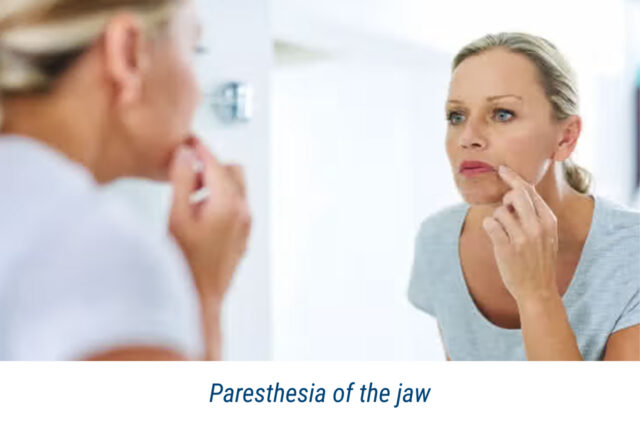
Why does jaw numbness occur after dental work?
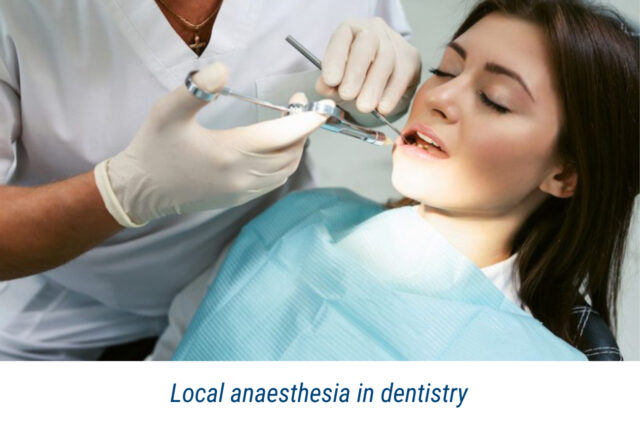
Most manipulations are carried out under local anaesthesia. This provides comfort for the patient and eliminates the fear of visits to the doctor. The essence of anaesthesia is to block the nerve endings in the jaw, so short-term numbness is a natural reaction to the injection of drugs.
The duration of numbness depends on the type of anaesthesia:
- when the anaesthetic gel is applied to the mucosa, the numbness passes within 20–30 minutes after the procedure;
- with infiltration anaesthesia, which is used most often, it takes 2–3 hours to regain sensitivity;
- Paresthesias persists for up to 5–6 hours with conduction anaesthesia, which is used for complex procedures and operations.
Nerve injury during treatment or extraction of a tooth
Treatment of cavities rarely results in long-term numbness of the jaw. If the carious process is complicated and pulpitis or periodontitis develops, there is a risk of paresthesia. It is caused by injury to nerve endings, residual inflammation and swelling of tissues after manipulation.
Complex tooth extraction, which requires gum incisions and root resection, can cause numbness. Doctors often prescribe surgical wisdom tooth extraction for misaligned or incompletely erupted teeth. In such cases, there is an increased risk of traumatising the nerve endings, leading to prolonged sensitivity disturbance after the procedure.
Extrusion of the filling material outside the canal
If the canal filling technique is incorrect, the nearby nerve may be compressed and traumatised. The most common complication when treating lower teeth is associated with damage to the inferior alveolar nerve.
In addition to the mechanical effect, the filling material may have toxic properties that aggravate the injury to the nerve endings. In this case, patients are bothered by a persistent decrease in sensitivity and facial pain of varying intensity.
Trigeminal nerve injury during implant surgery
The trigeminal nerve is the main nerve that ensures the sensitivity of the face, tongue, teeth, and oral mucosa and controls the masticatory muscles. In the maxillofacial zone, the nerve diverges into several branches. The lower alveolar branch innervates the lower teeth and is most often affected.
Inaccurate preparation of the bone bed, an implant that is too deep, and incorrect calculation of the insertion site and implant angle can all cause injury to the trigeminal nerve. Bone grafting, performed simultaneously with implant surgery, can also cause the problem.

How to diagnose the causes of jaw numbness?
The causes of jaw paresthesia range from natural reactions to dental intervention to potentially dangerous complications. You will need to consult a dentist to determine why your tongue, mouth, and lips are numb. At the first stage of the examination, the doctor examines the oral cavity, checks the sensitivity of different skin and mucous membrane areas, and examines the masticatory muscles’ function. To assess the state of tissues, the dentist also uses electro-onto-diagnostics and electroneuromyography.
X-rays and CT scans to detect problems
Radiological diagnostic methods are used to make accurate diagnoses. The basic research process is an orthopantomogram, which shows the state of the teeth and bone tissue of the jaws. However, in modern medicine, 3D computer diagnostics are more often prescribed. CT allows a detailed assessment of the condition of tissues in the maxillofacial region, revealing signs of trauma, inflammation, and other causes of paresthesia.
When do you need to see a dentist?
Usually, jaw numbness passes in a few hours. If the patient has undergone gum stitching after tooth extraction, bone augmentation, or dental implant placement, the sensitivity restoration period increases to several days. This situation does not require special medical attention.
A follow-up consultation with a dentist is necessary for symptoms such as:
- paresthesia longer than 24 hours after tooth treatment, longer than 2-3 days after tooth extraction or dental implantation;
- severe pain at the site of the procedure, in other parts of the jaw or face;
- significant swelling of tissues that does not reduce over time;
- facial asymmetry;
- impaired masticatory function and articulation;
- hypersalivation.
Treatment methods for numbness of the jaw
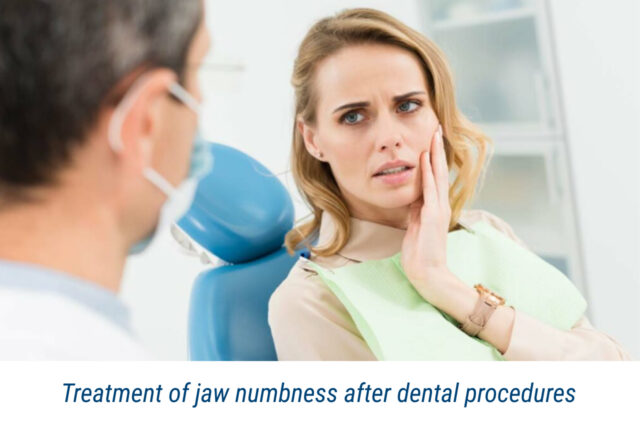
Paresthesias after dental treatment has a favourable prognosis. Gradually, the function of the nerve endings is restored and sensitivity returns. If the problem is caused by complications after anesthesia, edema or inflammation, numbness disappears after a few days. However, in case of nerve injury, it will take several weeks or even several months to eliminate paresthesia.
To speed up the recovery process, doctors prescribe:
- neurometabolic drugs;
- B vitamins;
- anti-inflammatory and anti-edema agents;
- antihistamines;
- electrophoresis, laser therapy, UHF and other physiotherapy methods.
If the above methods do not help, surgical treatment may be required. Manipulations aim to eliminate the cause of jaw numbness by opening and re-sealing canals, removing dental implants, etc.
How to prevent numbness of the jaw?
The risk of paresthesia cannot be completely ruled out, but it can be minimised through proper manipulation. In dentistry, great attention is paid to procedure planning. Doctors perform a CT scan of the teeth to assess the anatomical features of the jaw in a particular patient and choose surgical treatment tactics. During manipulations, they use low-trauma ultrasound and laser technologies to reduce the risk of nerve damage and minimise swelling. Dental microscopes are also used to increase the accuracy of the dentist’s actions.
Tips for choosing a clinic and a dentist
For dental treatment to be successful and without unpleasant consequences, it is necessary to take a responsible approach to the choice of a doctor. It is necessary to pay attention to the following factors:
- experience and qualifications of the specialist;
- examples of the doctor’s work ‘before’ and ‘after’;
- technical equipment of the clinic;
- availability of computer technologies for diagnostics and procedure planning;
- duration of the clinic’s activity;
- availability of a valid licence and permits for different types of dental services;
- patient feedback and the clinic’s reputation on the Internet.
KES Clinic of Aesthetic Dentistry in Kyiv meets all standards and provides patients with European-quality treatment. For over 20 years, the team of experienced doctors has been providing services on treating teeth and gums, prosthetics, dental implantation, and bone grafting.
Kyiv citizens and guests trust KES because of its modern scientific approach, the best equipment, attentive dentists, and acceptable prices.
Recommendations on care after procedures
Prevention of jaw numbness includes proper home care of the oral cavity. After dental treatment, the patient is advised to:
- avoid eating until the anaesthesia has worn off;
- brush gently without traumatising the site of dental manipulation;
- avoid eating too hard, spicy, hot food;
- chew on the opposite side of the jaw in the first few days after tooth extraction or implant placement;
- use antiseptic mouthwash;
- take all medications prescribed by the dentist.
If unpleasant symptoms occur in the post-procedure period or recovery is too slow, you should see the dentist again. The dentist will perform an examination and give additional recommendations.



 Out team
 Reviews
 Blog
Blog News
News Price list
 Partners
 FAQ
FAQ Vacancies
 Dental Consultation
 Tooth Decay Treatment
 Root canal treatment (endodontics)
 Orthodontics
 Dental implantation
 Dental prosthetics
 Professional oral hygiene
 Tooth Filling
 Periodontal disease treatment
 Teeth restoration
 Teeth extraction
 Surgical dentistry
 Sedation dentistry (sleep dentistry)