


 (227)
(227)


Only 1 person in 10 can boast of perfectly straight teeth and a correct bite. The rest experience various smile imperfections that become cosmetic flaws and often lead to dental disease.
One common dental imperfection is a diastema (gap) between the front incisors. In this article, you will learn in which cases the gap between the teeth should be corrected, how the treatment is carried out, and what consequences too large a diastema can lead to.

What is a diastema and why does it occur?
A diastema is a wide gap between the central incisors. It can be 1-10 mm in size, but 2-5 mm wide gaps are most common. This problem occurs in 15-20% of people and mainly affects the upper jaw.
The gap in the lower dentition or on both jaws at once is no more than 3% of the total number of cases. Diastema is considered a particular variation of trema, a term that refers to the widening of the interdental space in any part of the jaw.
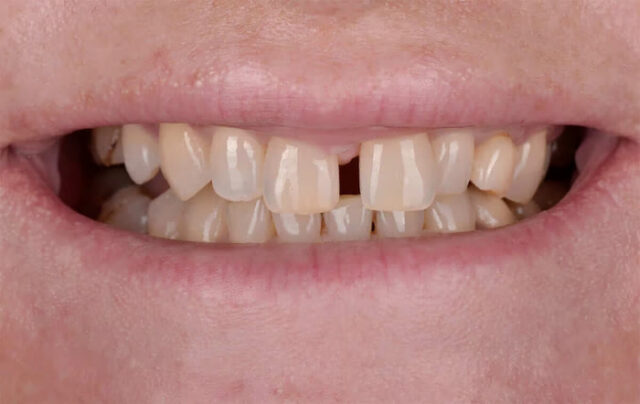
The following factors influence the formation of diastemas and tremas:
- congenital peculiarities of the jaw structure and laying of dental rudiments;
- small size of the anterior and lateral incisors with a relatively wide jaw;
- short frenulum of the tongue;
- too low attachment of the frenulum of the upper lip;
- the dystopia of teeth in the smile area;
- displacement of the anterior incisors after the loss of adjacent teeth;
- periodontal diseases;
- bad habits (nail biting, chewing on the cap of a pen.
Different Types and Stages
Dividing diastemas into false and true diastemas is of greatest practical importance. False ones are formed in children during deciduous teeth or bite change. A discrepancy between the speed of jaw growth and the appearance of permanent teeth causes them. In most cases, the gaps disappear by adolescence. A true gap between teeth is a condition that occurs in adolescents and adults with a permanent bite.
Additional criteria are used to describe diastema in detail:
- the position of the diastema in relation to the midline of the face is symmetrical and asymmetrical;
- diastema is divided into parallel and triangular diastema according to the shape of the interdental space;
- lateral displacement of crowns, corpuscle deviation of crowns and roots, medial inclination of incisors with simultaneous lateral displacement of dental roots.
Main Methods of Diastema Diagnosis
A visual examination of the oral cavity is sufficient for the dentist to detect a gap between the front teeth and determine its type. Additional diagnostics is prescribed if the patient has complaints, visible bite abnormalities or abnormal growth of individual teeth.
To obtain complete information, the doctor will need the data of an orthopantomogram and 3D tomography. On the images, the dentist assesses the condition of the dental roots of the anterior incisors, identifies associated diseases during oral examination.
Modern Methods for Correcting a Gap Between the Teeth
Whether a gap between the incisors needs to be corrected depends on its type and the patient’s wishes. No treatment is required in false diastemas, as physiological changes cause the problem. In the true form, dental care is necessary in cases such as:
- the patient is dissatisfied with the appearance of their smile and wants to hide the gap between the teeth;
- the doctor diagnoses concomitant bite anomalies that are medically significant and require orthodontic correction;
- the diastema is accompanied by unclear diction, whispering, discomfort when chewing food.
Before treatment, the dentist makes impressions and a plaster model of the dentition or performs 3D-modelling in a special programme. This method allows to clarify the degree and type of defect, select the optimal treatment option and demonstrate the expected result to the patient.
Orthodontic Treatment
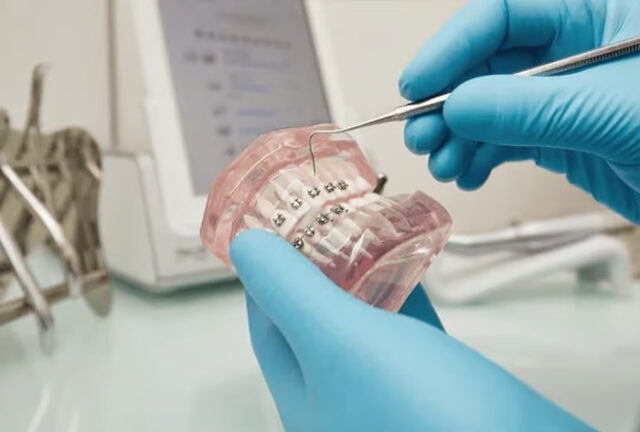
The combination of diastema and bite disorders is an indication for orthodontic alignment of the teeth. There are 2 treatment methods at the doctor’s disposal: braces and aligners.
Braces are a universal method of bite correction, which is suitable for cases of any complexity. They come in ligature and ligature-free, ceramic, sapphire and metal. The type of construction is selected taking into account the peculiarities of bite disorders, the shade of tooth enamel, the patient’s wishes regarding the aesthetics of orthodontic systems.
Aligners are transparent silicone mouth guards that are recognised as a great alternative to braces for minor dental irregularities. They are practically invisible when talking and smiling, do not cause discomfort to the patient and allow them to lead an active social life. During the treatment process, you will need to change the mouth guards every 3 weeks so that the teeth gradually shift and the gap between the incisors disappears.
Cosmetic Correction
If the problem is only an aesthetic imperfection of the smile, restoration of the front teeth is recommended. There are several methods of such treatment:
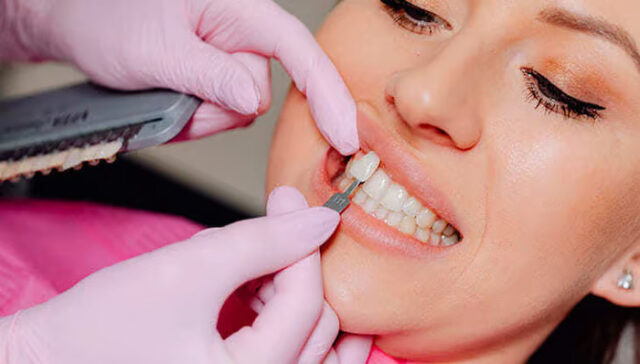
- Direct restoration. Composite material is used to increase the missing width of the incisors and correct their shape. Careful shade selection and layer-by-layer application of photopolymer allows for a natural smile appearance. After polymerisation of the material, the dentist grinds and polishes the teeth, giving them a healthy and attractive appearance.
- Veneers. Ceramic overlays on incisors are ideal for masking diastema and other imperfections in the shape, shade, or size of crowns. Veneers require little preparation of the enamel, fit perfectly over the tooth tissue, and look like natural teeth when properly shaded.
- Crowns. If the diastema of the anterior incisors cannot be covered by veneers, a ceramic or zirconia “cap” is used to cover the tooth from all sides. Placement of crowns is recommended after depulping of the anterior incisor, with discolouration, with increased erasability of enamel.
The doctor selects the method of closing the gap between the front teeth individually, as each method has advantages and disadvantages. Composite restoration is a budget option for eliminating diastema, which is carried out in one visit. However, it will not last more than 5-7 years and is inferior to other treatment methods in terms of durability. Ceramic veneers and dental crowns are more expensive, and this price is justified by their long service life, high aesthetics and durability.
Preventing Diastema
If congenital anatomical features of the jaw cause the gap, it can not be prevented. To avoid the appearance of an acquired diastema in a child or adult, it is necessary to observe the following recommendations:
- get rid of the habit of biting nails, pen or other foreign objects;
- correct bite disorders;
- treat periodontal diseases in a timely manner;
- visit a dentist twice a year for routine check-ups;
- monitor the condition of children’s teeth and, if necessary, bring them for orthodontic consultation.
After successful orthodontic treatment, secondary prevention of diastema should be taken care of. For this purpose, the doctor will prescribe wearing retainers for several years after removing braces or aligners. Retainers fix the position of the teeth and prevent them from returning to their previous position.
When and why do I need a dental consultation?
A wide gap between the teeth is an indication to see a dentist, regardless of other symptoms or the desire to correct this feature. TThe dentist should diagnose the diastema comprehensively and determine if other dental problems require mandatory treatment. Even a false diastema will require a doctor’s consultation to assess the proper bite change and jawbone development.
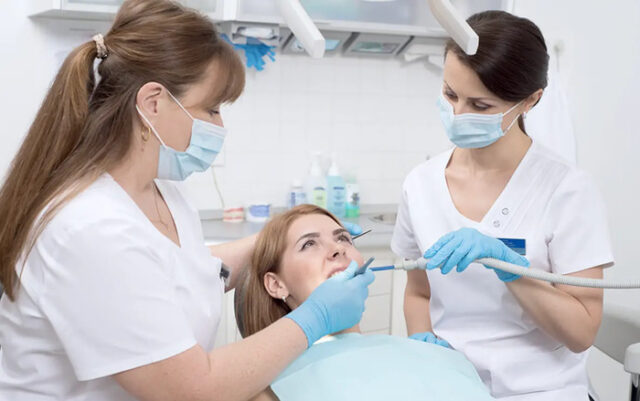
It should be remembered that too large a diastema disturbs the position of the adjacent teeth and prevents the jaws from clamping together properly. Subsequently, it can cause problems: rotation or displacement of other dental units, difficulties during oral hygiene, periodontal diseases.
A timely visit to the dentist and treatment, if necessary, will help avoid troubles and maintain a healthy smile.




 Out team
 Reviews
 Blog
Blog News
News Price list
 Partners
 FAQ
FAQ Vacancies
 Dental Consultation
 Tooth Decay Treatment
 Root canal treatment (endodontics)
 Orthodontics
 Dental implantation
 Dental prosthetics
 Professional oral hygiene
 Tooth Filling
 Periodontal disease treatment
 Teeth restoration
 Teeth extraction
 Surgical dentistry
 Sedation dentistry (sleep dentistry)