


 (17)
(17)

13 min.
399
Medical expert for this article:


The Impact of Stress on Dental Health
The link between stress and dental pathologies
Chronic stress really does take its toll on your teeth and gums; we see this every day at work. When you’re constantly on edge, your hormones go haywire, and it immediately affects your mouth. Saliva stops protecting your teeth properly, bacteria multiply at an alarming rate, and your jaws clench so tightly from the tension that they actually creak. And let’s be honest: when you’re completely drained, you often simply don’t have the energy to brush your teeth properly before bed. A direct, progressive correlation has been established between subjective stress levels, overall assessment of oral health, and toothache intensity. It was found that in patients without dental insurance and of low socio-economic status, the impact of stress on pain is more pronounced (the difference in predicted discomfort scores increases by 0.31–0.64 points on the pain assessment scale). This is mainly due to the inability to undergo routine oral hygiene treatment in a timely manner. The study was conducted by Canadian dentists. Severe inflammatory lesions of the periodontal tissues (periodontitis) affect around 10% of the world’s population and are the leading cause of tooth loss in adults. Chronic stress is recognised as an independent risk factor that complicates treatment and accelerates bone destruction (according to WHO statistics).The key biological mechanisms through which stress damages teeth and gums
The adverse effects of stress on the oral cavity are mediated through several interrelated mechanisms. These include neuroendocrine responses, changes in muscle tone, a reduction in the effectiveness of the immune system, and behavioural disturbances affecting oral hygiene and nutrition.1. The hormonal mechanism (activation of the HPA axis and local immune suppression)
One of the key pathogenic mechanisms involves the activation of stress-mediating neuroendocrine systems. During prolonged psychological and emotional stress, the body’s adaptive responses become chronic, which affects the state of local immune defence in the oral cavity. Prolonged stress triggers the hypothalamic-pituitary-adrenal axis (HPA axis), leading to a constant excessive release of cortisol (the main stress hormone) into the bloodstream. Normally, cortisol regulates metabolism, but its chronic excess has a pronounced immunosuppressive effect:- Cortisol stabilises lysosomal membranes and inhibits the migration of white blood cells to the site of bacterial invasion.
- Phagocytosis is inhibited — the immune system’s defence cells lose their ability to engulf and destroy pathogenic microorganisms.
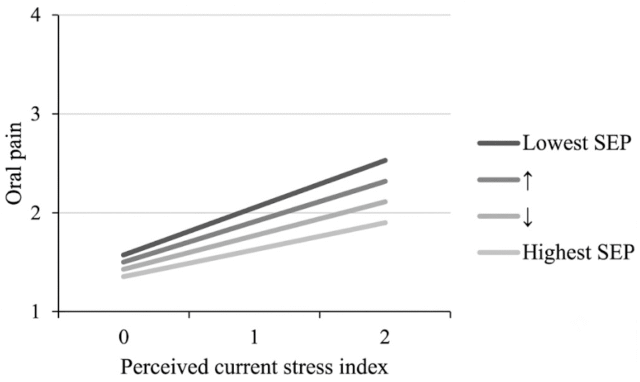
The effect of stress on toothache depending on socio-economic status
2. The nervous mechanism (bruxism and overloading of the masticatory system)
While hormonal changes may not be as noticeable, bruxism acts as a mechanical overload. When a person lives under prolonged stress, it can be difficult for them to truly relax, even whilst asleep. As a result, this tension can manifest as a strong clenching of the jaws and grinding of the teeth at night. Under the influence of stress, the central nervous system is in a state of constant arousal. At night, the brain’s motor cortex sends excessive signals to the masticatory muscles, causing involuntary spastic contractions—bruxism. During episodes of bruxism, the patient clenches their jaws and grinds their teeth. The force of jaw clenching during sleep can be 3–5 times greater than the maximum natural pressure exerted when chewing food. This leads to:- Severe wear of the enamel and dentine.
- Chips appearing on natural teeth, fillings, artificial crowns, or veneers.
- The formation of cervical defects (wedge-shaped defects) and enamel microcracks.
3. Behavioural factors (poor oral hygiene and diet changes)
The third mechanism relates to everyday behaviour. During periods of burnout, time pressure or severe fatigue, people are more likely to skip brushing their teeth, floss less frequently and, in general, pay less attention to regular oral care. Furthermore, stress often leads to changes in diet: people consume more sweets, coffee and quick snacks. All of this places additional strain on the teeth and gums. This is clearly evident from research data.- 78.8% of participants reported increased stress levels during peak periods of workload, and 56.3% admitted to skipping brushing or flossing at such times.
- There is a clear seasonal pattern to lapses in oral hygiene: missed care sessions account for 27.5% during midterms and peak at 33.8% during final exams and project submissions.
- There is a significant gap in self-assessment: 63.7% of respondents consider their hygiene to be ‘good’, although 40% admit they never use dental floss, and only 27.5% regularly clean interdental spaces.
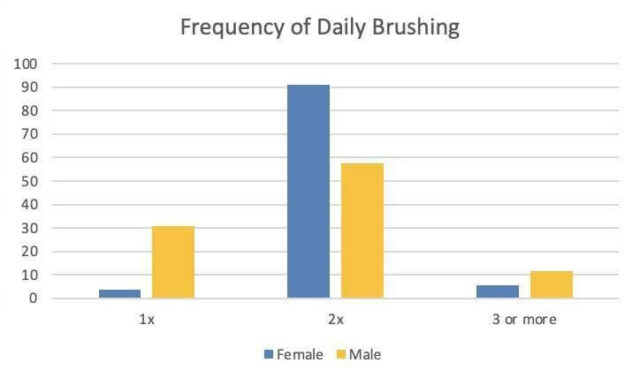
Frequency of daily tooth brushing among students
Top 4 dental conditions associated with stress
The direct biological effects of cortisol and adrenaline, combined with poor oral hygiene, can trigger the development of a number of serious conditions.1. Gum inflammation: gingivitis and periodontitis
One of the most common stress-related problems is gum inflammation. While in the early stages, this may manifest as bleeding and sensitivity; over time, the condition can progress to periodontitis. Studies show that such inflammatory changes occur significantly more frequently in people with severe stress and elevated cortisol levels.- In patients with periodontitis, the average morning saliva cortisol level was 2.6 times higher than in healthy individuals (6.67 ± 1.64 nmol/l versus 2.54 ± 0.88 nmol/l).
- The prevalence of clinical stress among patients with periodontitis was 42.5% compared with 18.33% in the control group without signs of inflammation.
- The likelihood of developing periodontitis increases by a factor of 3.73 with elevated salivary cortisol levels.
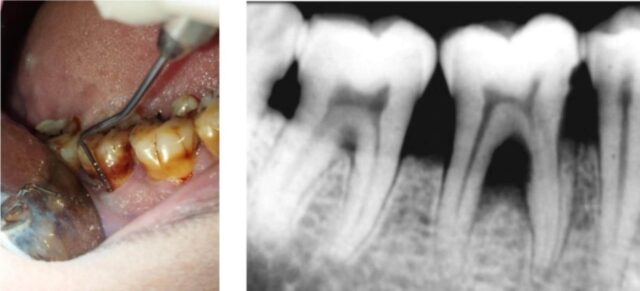
Bone loss in periodontitis and measurement of pocket depth
2. Systemic inflammation and cardiovascular risks
Periodontitis is not merely a localised problem affecting the gums. In cases of chronic inflammation, bacteria and inflammatory mediators can enter the bloodstream; consequently, oral health is increasingly recognised as a factor linked to overall health. Bacteria and inflammatory mediators (C-reactive protein, lipoprotein-associated phospholipase A2) enter the systemic circulation from periodontal pockets. This causes damage to the vascular endothelium and accelerates the formation of atherosclerotic plaques, increasing the risk of myocardial infarction and stroke. Modern gum treatment reduces markers of systemic inflammation. According to research, chronic inflammation in the oral cavity is associated with higher cardiovascular risks. In particular, a number of studies report an increase in the risk of myocardial infarction by approximately 49% and a roughly twofold increase in the likelihood of stroke (HUS study, Journal of Dental Research).3. Dry mouth (xerostomia) and rampant caries
Elevated levels of adrenaline and noradrenaline inhibit salivary gland function. Saliva plays a vital role in protecting the teeth: it washes away food debris, neutralises acids thanks to its buffering capacity, and supplies the enamel with calcium and phosphates (remineralisation). Dry mouth (xerostomia) leaves teeth defenceless against acids, causing the rapid development of cervical caries.4. Aphthous stomatitis and herpes
A sudden localised drop in immunity caused by cortisol manifests as sores in the mouth. Painful ulcers (aphthae) form on the mucous membranes of the cheeks and lips, making it difficult to eat and speak. Herpes infections on the lips also often recur due to stress.Self-diagnosis checklist: how stress manifests in the mouth
If you are going through a stressful period in your life, check for the following symptoms:- Your gums bleed when you brush your teeth or bite into hard foods.
- In the mornings, you feel stiffness, tension, or a dull ache in the temples and jaw joints.
- Your teeth have become sensitive to cold or hot water.
- You often experience a dry mouth, even if you drink enough water.
- Small, painful sores appear in your mouth from time to time.
- You notice that you unconsciously clench your jaws throughout the day when tackling difficult tasks.
How to protect your teeth during periods of increased stress: recommendations from the KES clinic
To minimise the damage caused by stress to your teeth and gums, a comprehensive approach is needed: regular home care, regular check-ups with your dentist, and, where possible, reducing your overall stress levels.1. Home care and lifestyle adjustments
- Strict discipline: Brush your teeth twice a day. If you feel very tired, use an electric or sonic toothbrush, which cleans more effectively with less effort.
- Enamel fluoridation: Use toothpastes with a fluoride concentration of at least 1450 ppm. This compensates for the reduced protective properties of saliva and protects the enamel from demineralisation.
- Interdental hygiene: Do not neglect flossing before bed. If you have gum inflammation, use a water flosser on a gentle setting.
- Fighting xerostomia: Drink clean, still water in small sips throughout the day. Limit your consumption of coffee, alcohol, and sugary fizzy drinks.
- Managing harmful habits: Stop unconsciously chewing on pens, pencils, your nails or biting your lips — this damages the mucous membrane and creates dangerous micro-stress on the teeth.
2. Professional dental care
- Fitting of night guards: If you have symptoms of bruxism, your dentist will take individual impressions of your jaws and make a customised night guard. The guard prevents enamel wear, protects veneers and crowns from chipping, and relieves excessive strain on the temporomandibular joint.
- Orthodontic treatment: An incorrect bite worsens the destructive effects of bruxism. Timely correction of the bite using metal or ceramic braces or clear aligners distributes chewing pressure evenly across the entire dentition.
- Cosmetic dental restoration: Enamel chips, wedge-shaped defects, and wear are restored using aesthetic restoration techniques, such as fitting ceramic veneers or zirconia crowns, thereby restoring the teeth’s anatomical shape and height.
3. Interdisciplinary collaboration
As the root cause of muscle hypertonicity and high cortisol levels lies in nervous system overload, dental treatment should be carried out in parallel with stress management. The dentist may recommend a consultation with a neurologist (to prescribe muscle relaxants for severe masticatory muscle spasms) or with a psychotherapist.When a visit to the dentist cannot be postponed
A routine preventive check-up is recommended every 6 months. This allows for the detection of hidden cracks in the enamel, the early stages of tooth decay, and the first signs of periodontitis before they cause acute pain. You should book an urgent appointment with a dentist if the following symptoms appear:- Bleeding gums persist for more than a week despite home care.
- You regularly experience headaches and pain in your temples or jaw muscles in the mornings.
- You have noticed a chip in a tooth, crown, or filling.
- Sores on the inside of your mouth do not heal within 10–14 days.
- You experience sharp pain when biting down on a tooth or a reaction to temperature changes.
Learn more about the services related to this topic. Below, you’ll find detailed information about the relevant treatment methods and options.

Tooth Decay Treatment

Treatment of Periodontitis and Gum Disease



 Our team
 Reviews
 Blog
Blog News
News Partners
 FAQ
FAQ Vacancies
 Dental Consultation
 Tooth Decay Treatment
 Root canal treatment under a microscope
 Orthodontics
 Dental Implants
 Dental Prosthetics
 Professional Oral Hygiene
 Tooth Filling
 Periodontal disease treatment
 Aesthetic Dental Restoration
 Teeth extraction
 Surgical dentistry
 Sedation dentistry (sleep dentistry)