


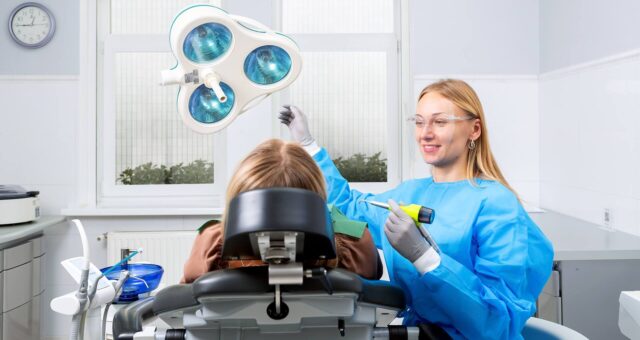
Ultrasonic teeth cleaning
Price of Ultrasonic Teeth Cleaning
The price includes ultrasonic cleaning, air flow and the application of polishing paste.
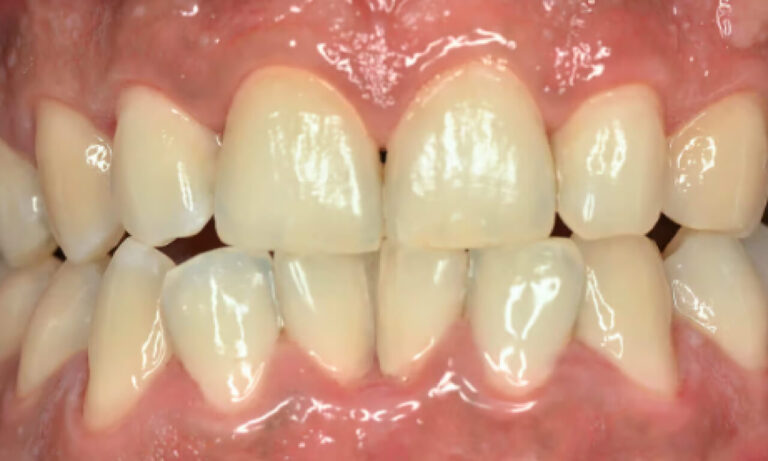
Ultrasound cleaning of tartar
The main stage of professional cleaning – is carried out with the help of an ultrasonic nozzle, which has a tip that vibrates at a particular frequency; the tip has a water supply and forms bubbles in cavitation. Thus, water under pressure displaces tartar and plaque. The tooth surface remains undamaged. The range of nozzles allows you to choose the best option for the morphotype (structure) of the gum. Ultrasonic teeth cleaning may be accompanied by tooth sensitivity; local anaesthesia is applied if necessary.
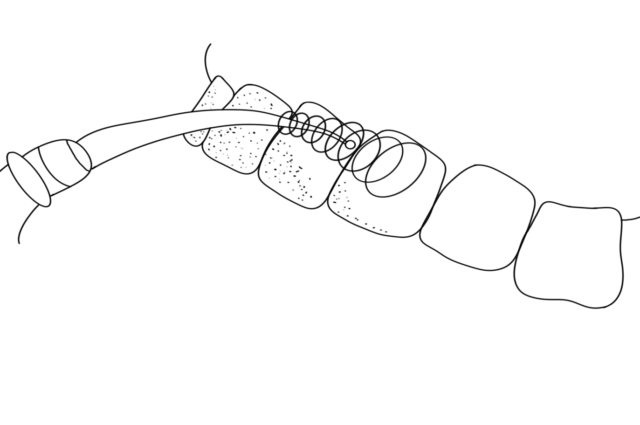
Advantages of ultrasonic dental tartar removal
After ultrasonic cleaning, detecting hidden caries, determining their clear boundaries, and providing access to work in periodontal pockets is possible.
Cleaning with ultrasound is safe for the patient. It is carried out with abundant irrigation with distilled water or special disinfectant solutions, which allows additional cooling of the tooth tissue from the work of the nozzle.
Indications and contraindications
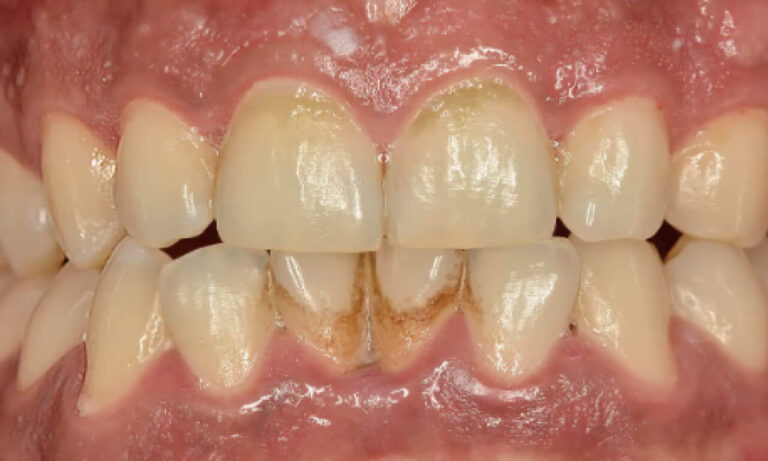
Teeth cleaning is an excellent prevention of oral diseases such as tooth decay, symptoms of gum inflammation, bad breath, and bacterial growth on teeth and mucous membranes.
The frequency of the procedure depends on the rate of tartar accumulation.


Reviews


FAQ
Are a toothbrush and dental floss enough to clean bridges and implant crowns?
After rehabilitation, we always recommend hygiene products, depending on the types of prosthetic restoration and the oral cavity condition.
It can be end-tufted and interdental brushes, superfloss, irrigators, and other dental products in addition to toothpaste, brushes, and floss.
Do teeth become whiter after a dental cleaning?
Oral hygiene procedures are aimed at removing calculus and plaque from the surface of the teeth. After a dental cleaning, the teeth become a bit whiter only due to the removal of plaque.
While whitening changes the color of the tooth itself by exposing it to chemical compounds.

 Out team
 Reviews
 Blog
Blog News
News Price list
 Partners
 FAQ
FAQ Vacancies
 Dental Consultation
 Tooth Decay Treatment
 Root canal treatment (endodontics)
 Orthodontics
 Dental implantation
 Dental prosthetics
 Professional oral hygiene
 Tooth Filling
 Periodontal disease treatment
 Teeth restoration
 Teeth extraction
 Surgical dentistry
 Sedation dentistry (sleep dentistry)