


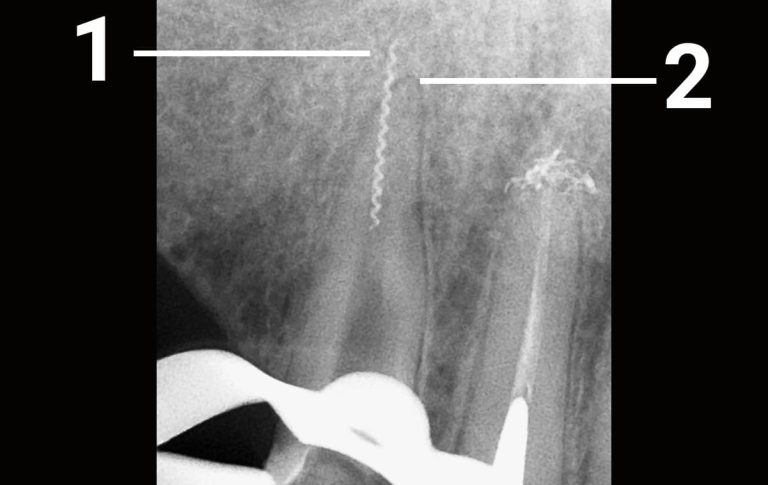
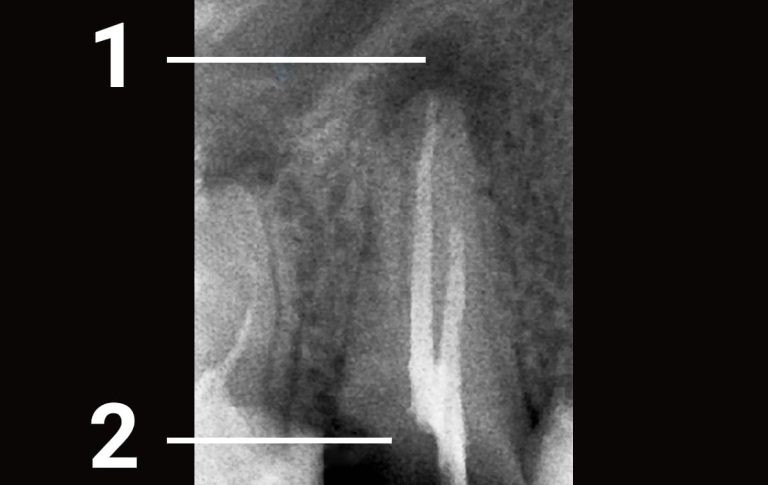
Before
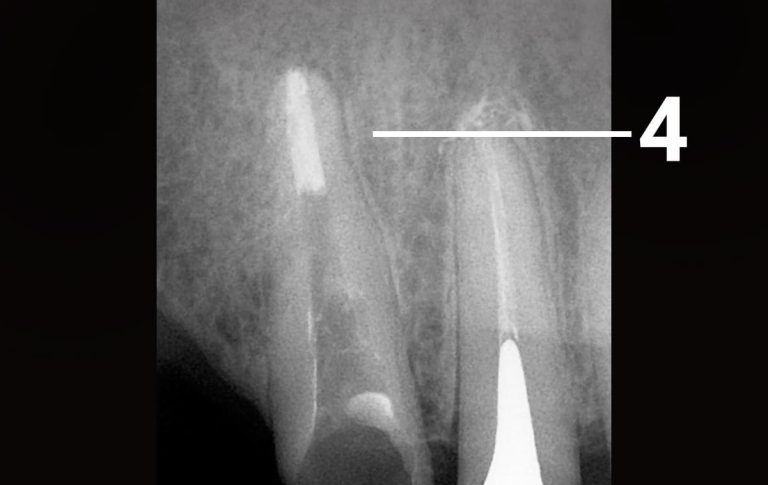
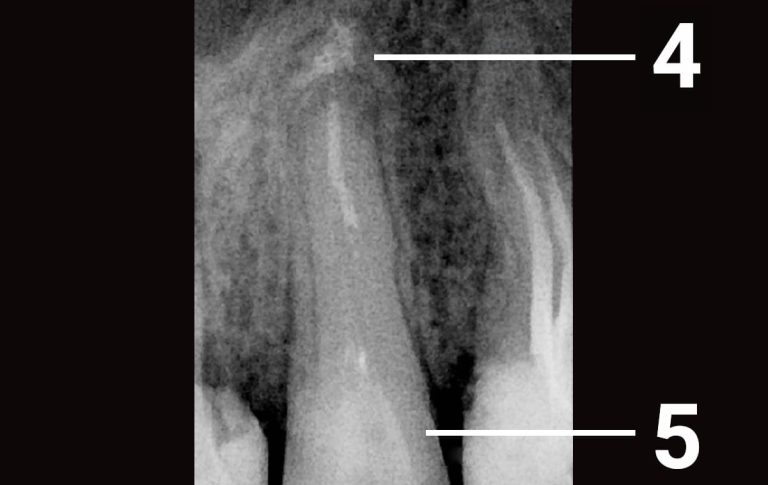
After
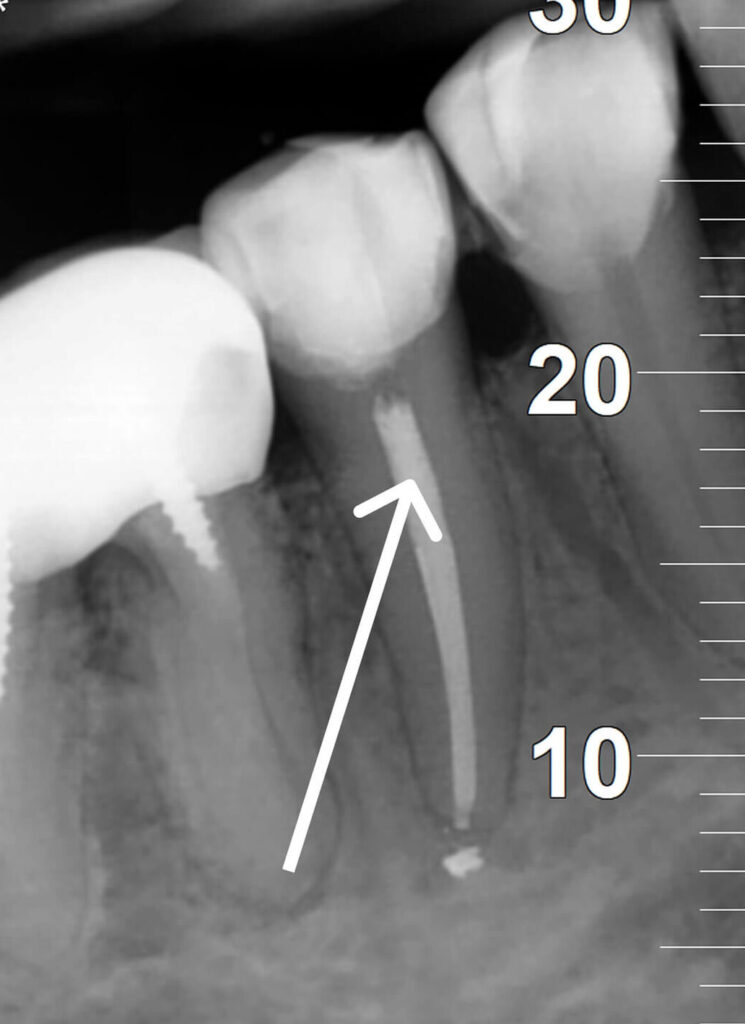
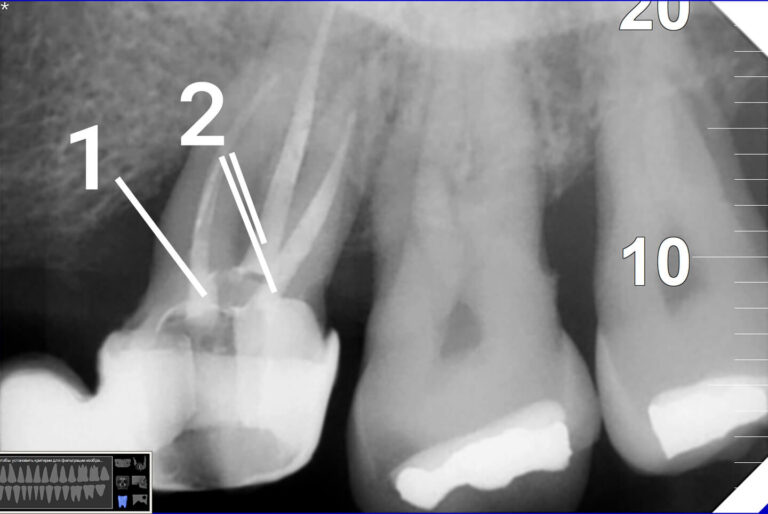
In brief: the patient presented with pain under a crown (reaction to cold and hot, increasing over a week). The cause was an infected root canal. We performed endodontic treatment through the existing crown without removing it: created access through the crown, cleaned and hermetically obturated the canal, then restored the access. The crown was fully preserved — no re-prosthetics.
Key facts
| Complaint | Pain under a crown, cold/hot reaction, rising over a week |
| Diagnosis | Infected root canal under the crown |
| Method | Endodontics through the crown (trans-restorative access) |
| Crown | Preserved, not removed |
| Access restoration | Composite / glass-ionomer |
| Benefit | Saves time and money, no re-prosthetics |
| Prognosis | High with a sound crown and a tight access seal |
Canal treatment through a crown — what it is
This is endodontic treatment in which access to the root canal is created directly through the artificial crown without removing it. The opening is made with special water-cooled burs; the canal is cleaned and obturated, and the access is then hermetically sealed with filling material. The approach is used when the crown is sound and well-fitting — to preserve a costly restoration.
Stage 1. Diagnosing the cause of pain
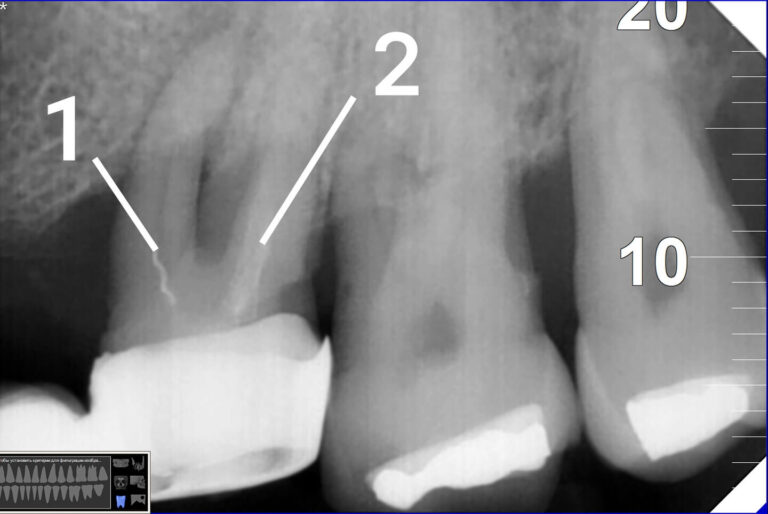
A reaction to cold and hot with increasing pain pointed to inflammation in the root canal under the crown. The X-ray let us assess the root and the marginal fit of the crown, and we decided to treat the tooth through the crown without removing it.
Stage 2. Isolation and access through the crown
The tooth was isolated with a rubber dam. We carefully created access to the pulp chamber directly through the crown using diamond and carbide burs with water cooling to avoid porcelain chipping and overheating. The crown’s fixation is not disturbed.
Stage 3. Cleaning and obturating the canal
The infected canal was negotiated, working length set, cleaned mechanically and with medication (NaOCl and EDTA irrigation), and sealed hermetically with gutta-percha and a sealer.
Stage 4. Sealing the access in the crown
The access cavity in the crown was restored with composite (glass-ionomer when indicated), returning the crown to a sealed, aesthetic state.
Treatment through the crown vs removing the crown
| Parameter | Through the crown (no removal) | Removing the crown |
| Crown preserved | Yes | A new crown is often needed |
| Cost and time | Lower, single stage | Higher (re-prosthetics) |
| When indicated | Sound, well-sealed crown | Leaking, broken, view-obstructing crown |
| Risk | Minor chip on access (controlled) | Crown damage on removal |
Result and prognosis
The inflammation in the canal was eliminated, the pain disappeared, and the permanent crown was fully preserved — no re-prosthetics were needed. The prognosis is high under two conditions: the crown is sound and sealed, and the access is reliably restored after treatment. Treating through a sound crown saves the patient time and money and can extend the life of the crowned tooth for years with good hygiene and preventive check-ups.
FAQ
Q: Can a root canal be treated without removing the crown?
A: Yes. If the crown is sound and well-fitting, access is made directly through it. This preserves the restoration and allows full endodontic treatment.
Q: Why does a tooth hurt under a crown?
A: The most common cause is inflammation or infection of the root canal under the crown (pulpitis or periodontitis). The pain may react to cold and hot and gradually intensify.
Q: Won’t the access hole damage the crown?
A: No. The access is made carefully with water-cooled burs and is hermetically restored with composite afterwards. The crown keeps its strength.
Q: When does the crown still need to be removed?
A: If the crown is leaking, broken, ill-fitting, or obstructs proper canal cleaning. Then it is replaced after the endodontic treatment.
Q: Is a microscope needed for treatment through a crown?
A: A dental microscope or magnification is highly desirable: it helps locate the canal orifices precisely through the crown and control the cleaning, reducing the risk of errors.
Q: Is a hot reaction under a crown always the canal?
A: Most often yes: increasing pain and a reaction to heat indicate pulpal or periodontal inflammation. The exact cause is determined by tests and an X-ray.
Q: How long will the tooth last after treatment through the crown?
A: With a tight seal, a sound crown and good hygiene — for many years. Preventive check-ups and monitoring the crown matter.
Clinic of Aesthetic Dentistry (KES), Kyiv — established in 2000; treatment is performed by top-category doctors. This material is informational; the exact plan is defined after an in-person consultation and diagnostics (X-ray/CBCT).

 Our team
 Reviews
 Blog
Blog News
News Partners
 FAQ
FAQ Vacancies
 Dental Consultation
 Tooth Decay Treatment
 Root canal treatment under a microscope
 Orthodontics
 Dental Implants
 Dental Prosthetics
 Professional Oral Hygiene
 Tooth Filling
 Periodontal disease treatment
 Aesthetic Dental Restoration
 Teeth extraction
 Surgical dentistry
 Sedation dentistry (sleep dentistry)